The FTC Mailed 65,022 Checks Totaling More Than $9.8 Million to People Scammed Through Walmart’s Money Transfer Services
An envelope from a company called Rust Consulting is easy to toss with the junk mail this fall. For 65,022 people who sent money through Walmart’s transfer counters, that envelope holds a federal refund check. The Federal Trade Commission says the checks total more than $9.8 million and come from the agency’s case over scammers who used Walmart’s wire transfer services to take money from shoppers.
Who the FTC is paying
The FTC announced the payments on Oct. 15. In a press release that day, the agency said it is sending 65,022 checks totaling more than $9.8 million to consumers harmed by scammers who took money from them using Walmart’s wire transfer services.
No claim form was needed for this round. The FTC describes the program as checks it is sending out, with Rust Consulting acting as the refund administrator, and a PPC Land breakdown of the release notes the payments are going out by paper check only.
The FTC has not published an average payment. Dividing the total by the number of checks works out to roughly $150 apiece, but the agency has not said the checks are equal.
Questions about a specific check go to Rust Consulting at 1-833-472-1990, according to the FTC.
From a 2022 lawsuit to a $10 million order
The money traces back to a lawsuit the FTC filed against Walmart in June 2022 in federal court in Chicago. Walmart disclosed the case the same day in a June 28, 2022, filing with the Securities and Exchange Commission, describing a civil complaint in the Northern District of Illinois “regarding money transfer services and the Company’s anti-fraud program in its capacity as an agent.” The FTC accused the retailer of letting fraud flow through the money transfer services it offered in its stores, both as an agent for MoneyGram, Western Union and Ria and through its own Walmart2Walmart and Walmart2World services.
Walmart fought the case. In an Aug. 29, 2022, motion to dismiss, the company asked the court to “dismiss the FTC’s claims with prejudice.” The FTC filed an amended complaint in June 2023 that added telemarketing claims. In July 2024, the district court dismissed the Telemarketing Sales Rule claim for a second time, and in November 2024 the Seventh Circuit allowed Walmart to appeal certain rulings, according to the agency’s June 2025 settlement announcement.
Walmart settled in June 2025. The company agreed to pay $10 million, as FOX 7 Austin reported when the refunds were announced. The FTC alleged that from 2013 to 2018, scammers used Walmart’s money transfer services to take hundreds of millions of dollars from consumers, and that Walmart failed to put effective anti-fraud policies in place, did not properly train employees and did not warn customers about transfer fraud.
The order also bars Walmart from sending or paying out transfers it knows, or consciously avoids knowing, are fraud-induced, and requires steps to detect and prevent that kind of fraud. Christopher Mufarrige, director of the FTC’s Bureau of Consumer Protection, said at the time that companies offering these services “must train their employees to comply with the law and work to protect consumers.” He also noted that once money is wired, “it’s gone for good.”
Walmart did not admit the allegations in the settlement. The case is FTC v. Walmart, No. 1:22-cv-03372, as summarized in an Open Class Actions review of the case history.
Ninety days to cash the check
The checks do not last forever. The FTC says recipients should cash them within 90 days, as printed on the check itself. After that, the check expires, and Open Class Actions reports that expired checks may be reissued only if money remains in the fund.
For older households and anyone who lost money in a wire scam years ago, the arrival can be a surprise. The check comes from the FTC’s refund administrator rather than from Walmart, which is normal for these programs.
A separate FTC effort on a different case is also paying out this month. The agency began sending PayPal payments on Oct. 27 to customers of the cash-advance app Cleo AI, a reminder that the FTC often runs several refund programs at once.
How to tell a real FTC refund from a fake one
Refund season is also scam season. The FTC warns that impersonators pose as the agency. It says it never threatens people, never demands a money transfer to “get a refund” and never promises prizes, and that any contact doing those things is a scam.
That warning matters here, because the people receiving these checks already lost money once through a transfer. A follow-up call or text asking for a fee, a bank login or a gift card to “release” a Walmart refund is a red flag. Genuine FTC refunds do not require payment or account information to receive.
The FTC’s broader data shows how costly these schemes become for older adults, covered in an earlier report on the $3 billion older Americans reported losing to fraud in 2025.
Where this fits among this fall’s payouts
The Walmart refunds are one of several household-name payouts moving this season. Unlike most class-action settlements, which require a claim and a court’s final approval before anyone is paid, this program is already in the mail. Settlements such as Amazon’s $309.5 million returns case still run on claim deadlines.
For anyone who sent money through a Walmart counter in those years and later learned it went to a scammer, the practical step is to watch the mail for a check from Rust Consulting and deposit it well before the 90 days run out. Fraud involving money transfers can be reported to the FTC at its ReportFraud site.
Get stories like this by email. Sign up for The Parent Diaries Letter.
This article was produced with AI assistance and edited for accuracy against the sources linked above.
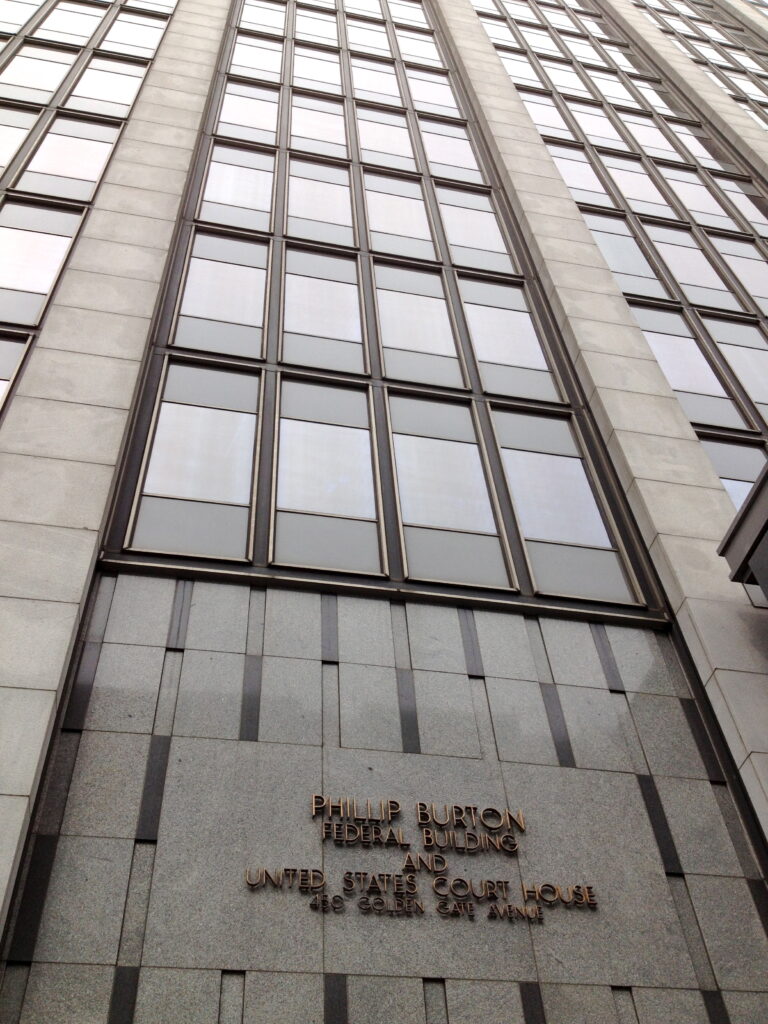
Image: FLGALine1999 – CC0/Wikimedia Commons