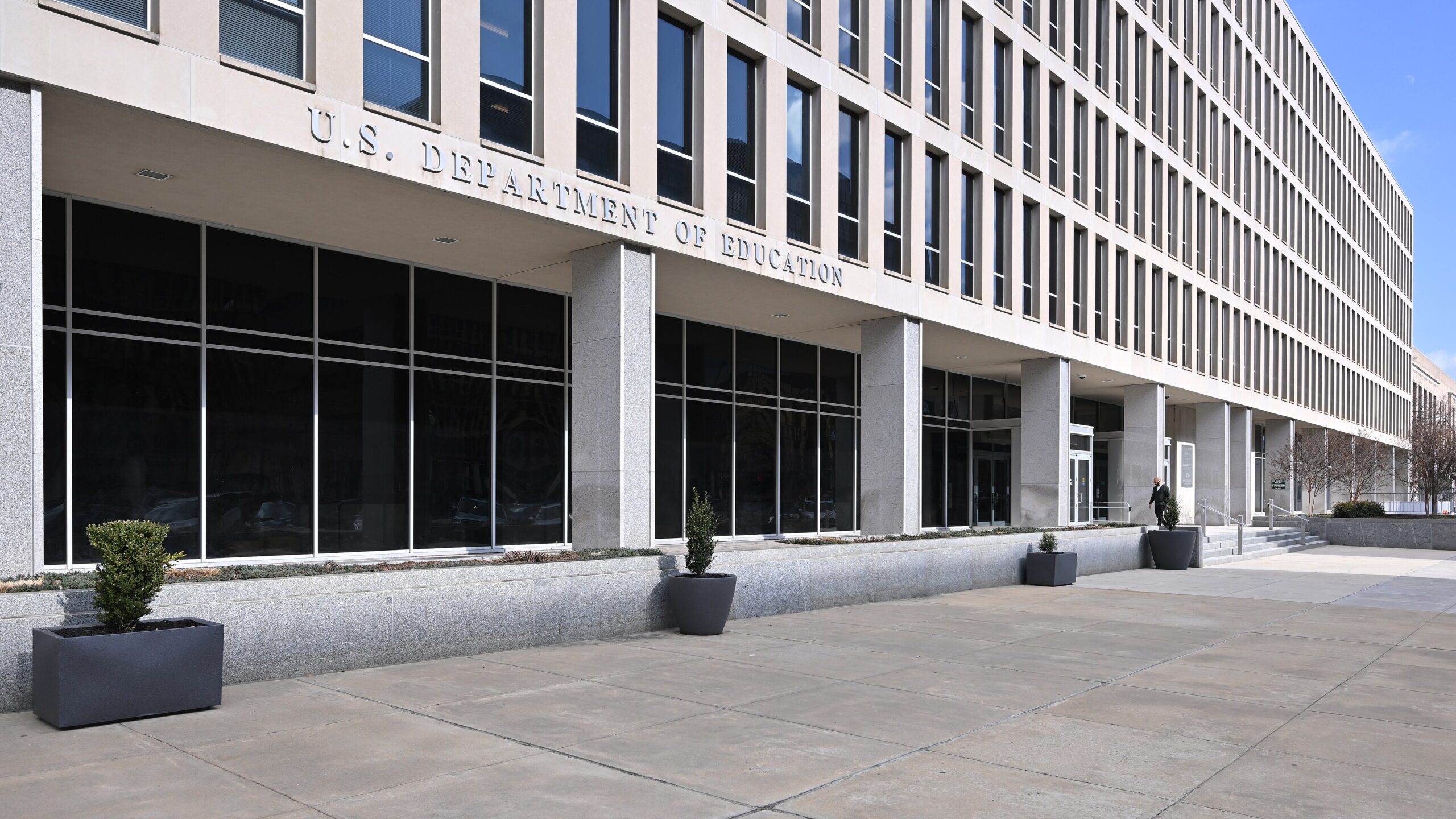
The Education Department Dropped Its Appeals Over Public Service Loan Forgiveness Rules Courts Called Unlawful, as 2.3 Million Borrowers Pursue PSLF
A short filing in a Boston appeals court has ended the Trump administration’s attempt to rewrite who counts as a public service employer. On Oct. 21, 2026, the U.S. Department of Education and the groups that sued it signed a joint stipulation to dismiss the government’s appeal in the U.S. Court of Appeals for the First Circuit. The move leaves in place court rulings that found the department’s Public Service Loan Forgiveness rule unlawful, a result that matters to the more than 2.3 million borrowers pursuing PSLF.
The Filing That Ended the Appeal
The stipulation, filed under the caption National Council of Nonprofits v. Linda McMahon, appeal No. 26-1972, states that “the parties hereby stipulate to the dismissal of this appeal, with each side to bear its own fees and costs.” It was filed under Federal Rule of Appellate Procedure 42(b)(1), which allows an appeal to be dropped by agreement.
Forbes reported on Oct. 23 that the department withdrew its appeals after losing three separate legal challenges in June, and that it gave no formal explanation for the reversal. The government had said in August that it would appeal.
Democracy Forward, one of the legal groups representing the challengers, said in an Oct. 22 press release that the dismissal ensures the rule “will never take effect.”
What the Rule Would Have Changed
PSLF, created by Congress in 2007, cancels remaining federal student loan balances after at least 10 years of qualifying payments while working for a government agency or qualifying nonprofit. Forbes reported that after a presidential executive order, the department wrote rules giving Education Secretary Linda McMahon authority to disqualify nonprofit and government employers that engaged in activities the department deemed to have a “substantial illegal purpose.”
Under that rule, a borrower whose employer was disqualified would have stopped earning credit toward forgiveness, with no recourse or right of appeal, according to Forbes. The challengers argued the rule would let the department cut off employers whose work opposed administration policies. Democracy Forward’s press release described it as a tool to “silence” nonprofits and local governments.
The coalition behind the lawsuit included the cities of Albuquerque, Boston and Chicago, the City and County of San Francisco, the County of Santa Clara, the National Council of Nonprofits, the National Association of Social Workers, Legal Aid DC, and three major unions: the American Federation of Teachers, the American Federation of State, County and Municipal Employees, and the National Education Association.
A Judge Found the Rule Unlawful in June
The case was filed on Nov. 3, 2025, in the U.S. District Court for the District of Massachusetts, according to Democracy Forward’s case timeline. It was decided together with a separate challenge brought by the Commonwealth of Massachusetts and other states.
In a memorandum opinion dated June 30, 2026, U.S. District Judge Myong J. Joun sided with the challengers and held that “the Department’s latest PSLF rule is unlawful.” The opinion found that Congress had defined the scope of a “public service job” in the statute, leaving the department without authority to add its own exclusion. Forbes quoted the ruling’s conclusion that “there is no doubt that Congress spoke plainly and comprehensively on the scope of the term ‘public service job.'”
Democracy Forward’s timeline says the court vacated the final rule. The government filed its notice of appeal to the First Circuit on Aug. 27, 2026, nearly two months before it agreed to drop it.
What It Means for the 2.3 Million Borrowers
More than 2.3 million borrowers are pursuing PSLF, according to Education Department figures published in the Federal Student Aid PSLF data center and cited by Forbes. For them, the dismissal means employer eligibility stays tied to the standards Congress wrote: government employers and qualifying nonprofits, without a new department test of whether an employer’s activities have a “substantial illegal purpose.”
Leaders of two plaintiff groups welcomed the outcome. AFSCME President Patrick Moran said the union was glad the administration “is now following the law and abandoning this illegal scheme,” according to Forbes. Diane Yentel, president and CEO of the National Council of Nonprofits, said, “With the appeal dismissed, the court’s order vacating the rule stands, and PSLF remains as Congress designed it.”
Local governments that joined the suit framed the result around their own workforces. Chicago Mayor Brandon Johnson said in statements released by the plaintiffs that “the City of Chicago employs over 30,000 people” and that the city was proud to have helped protect the program for them. San Francisco City Attorney David Chiu said, “This victory ensures the Public Service Loan Forgiveness program is here to stay.”
Santa Clara County Counsel Tony LoPresti said the decision to drop the appeal reaffirms the position the county had taken from the start. Winston Berkman-Breen, legal director of the borrower advocacy group Protect Borrowers, which helped represent the coalition, said, “It’s good that Trump’s lawyers gave up their fight and bowed to reality.”
What Stays the Same for Borrowers
The dismissal does not change how PSLF itself works. The program still requires at least 10 years of qualifying payments while working in public service, the standard Congress set in 2007, as Forbes noted. What it removes is the prospect that a borrower’s employer could be struck from the qualifying list partway through those 10 years under a new department test.
For nonprofits and local governments, that removes a risk that would have hung over hiring and retention. A worker counting on forgiveness after a decade of service would have had no way to know in advance whether an employer’s activities might later be labeled as having a “substantial illegal purpose.” With the June rulings now final on appeal, that question no longer applies.
Get stories like this by email. Sign up for The Parent Diaries Letter.
This article was produced with AI assistance and edited for accuracy against the sources linked above.
Image: G. Edward Johnson – CC BY 4.0/Wikimedia Commons