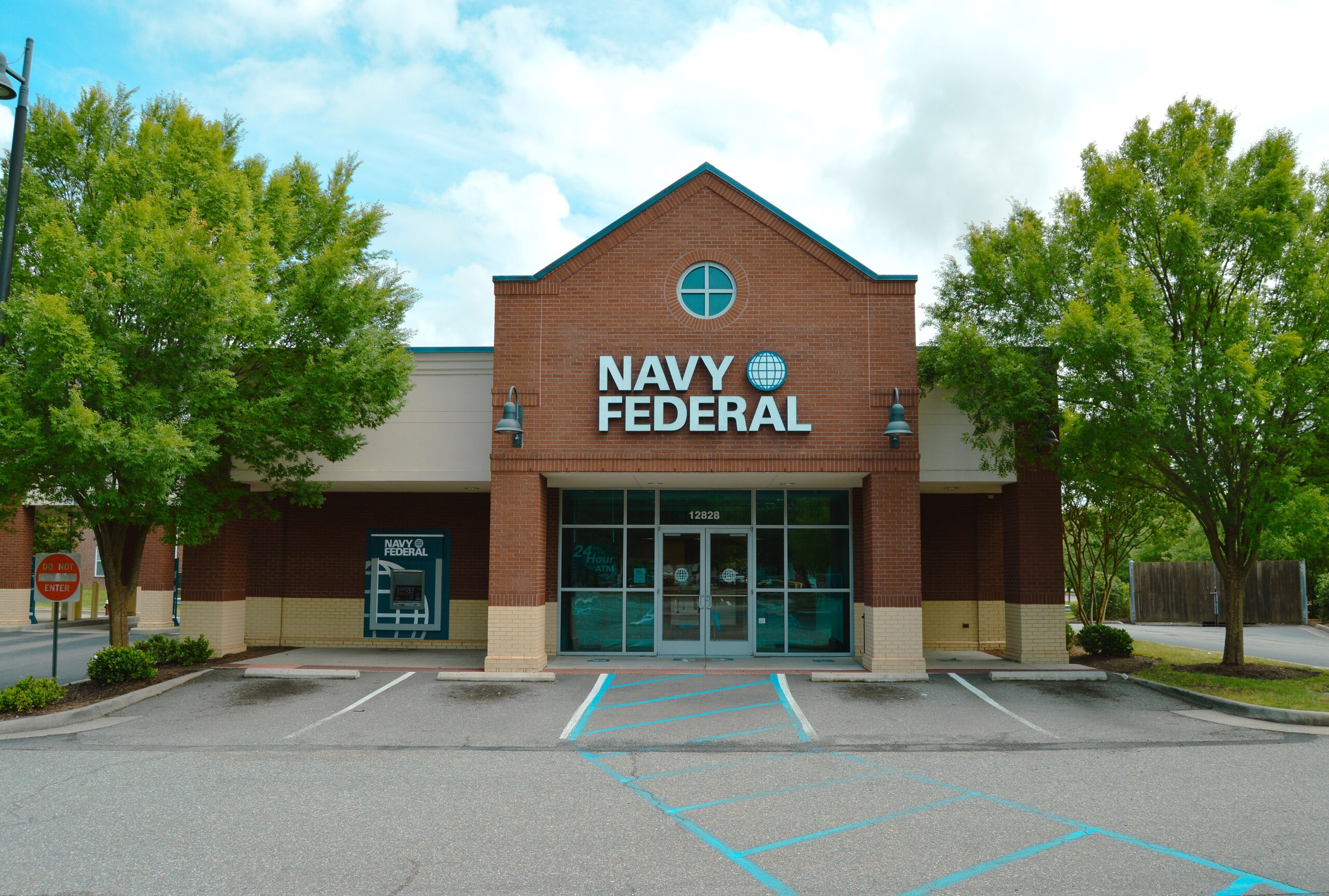
Navy Federal Members Whose Fraud Disputes Over Personal Loans Were Denied Can Claim $250 by Nov. 29, on Top of Automatic Loan Cancellation
About 1,607 Navy Federal Credit Union members have been stuck with personal loans they say fraudsters took out in their names, and with payments, collection calls and credit report damage that followed. A proposed class action settlement would wipe those loans out and refund what members paid on them. Members who also want an extra $250 have to file a claim by Nov. 29.
What the settlement does automatically
The case is Edey et al. v. Navy Federal Credit Union, No. 2:25-cv-554, in the U.S. District Court for the Eastern District of Virginia. The official settlement website says Navy Federal “will automatically cancel” covered loans, “request the deletion of any credit reporting related to the loan” and refund payments made on those loans to the member’s Navy Federal account.
Those benefits do not require a form. According to a ClaimDepot summary of the settlement terms, the reimbursement covers all payments made on the loans, including offsets Navy Federal took from members’ accounts. Navy Federal would cancel loans and contact the credit bureaus within 45 days of final approval, and the administrator would issue payments within 60 days of final approval.
The class is narrow. As Top Class Actions laid out the definition, it covers Navy Federal members who received a personal loan between Jan. 1, 2023, and Jan. 31, 2025, where the application came from a device Navy Federal did not recognize, the money was deposited into the member’s account, the member disputed the loan as fraud, Navy Federal denied the claim in whole or in part, and the funds have not been fully recovered.
In practice, people in the class should have received a notice. An Open Class Actions guide to the case describes receiving that notice as the practical test of membership, and online claims require the notice ID and PIN printed on it.
The $250 requires a claim by Nov. 29
The extra cash is the one piece that is not automatic. Class members must submit a claim form for the $250 payment, postmarked or filed online by Nov. 29, 2026, according to the settlement website. The claim form is the last page of the mailed notice.
Current members would receive the $250 by direct deposit to a Navy Federal account, while former members would receive a paper check, ClaimDepot reports. No receipts are required, but the form is signed under penalty of perjury.
The other deadline on the calendar comes sooner. Anyone who wants to opt out of the settlement or object to it must do so by Nov. 9. Members who do nothing still receive the automatic loan cancellation and refunds, but they are bound by the final judgment.
Attorneys’ fees of up to $250,000 and service awards for the named plaintiffs are paid separately and do not reduce what class members receive, according to the Open Class Actions guide.
A call from the credit union’s own number
The lawsuit describes how the scheme worked. The class action complaint, filed Sept. 8, 2025, says lead plaintiff Stacy Edey received a call on April 13, 2024, from the number Navy Federal advertises for its 24/7 member services. Around the same time, two deposits totaling $5,535.37 posted to her checking account. The caller said the deposits were mistakes and told her to transfer the money to another member, and she did.
Three days later, according to the complaint, she learned that a $4,000 personal loan had been taken out in her name. Navy Federal demanded repayment and reported the loan to Equifax, Experian and TransUnion. She disputed it in August and October 2024, and the complaint says the loan stayed on her credit reports.
The complaint alleges the loans were applied for online from unfamiliar devices and IP addresses, that loan documents went to email addresses fraudsters had changed, and that Navy Federal did not verify applicants’ identities as its membership agreement promised. Navy Federal denies wrongdoing and agreed to settle to avoid the cost of litigation.
The complaint names three plaintiffs, Stacy Edey, Kellie High and Ronnice Lee. It brought claims for negligence and breach of contract, plus individual claims under the Fair Credit Reporting Act over how Navy Federal handled their credit disputes. It also alleged that Navy Federal used fraud detection on transfers but not on loan applications.
Impersonation calls that borrow a real institution’s phone number are a familiar pattern in fraud reports, as an earlier look at the $3 billion older Americans reported losing to fraud in 2025 showed.
The Dec. 9 hearing
Senior U.S. District Judge Arenda L. Wright Allen granted preliminary approval on July 10, 2026. Her preliminary approval order found the settlement appears “fair, reasonable, and adequate” and set the final approval hearing for Dec. 9, 2026, at noon at the Walter E. Hoffman U.S. Courthouse in Norfolk.
If the judge grants final approval and there is no appeal, the loan cancellations, credit bureau requests and refunds would follow within the 45- and 60-day windows set in the agreement. Settlements like AT&T’s $177 million data breach case show how an appeal can push payments back.
For members who received a notice, the practical steps are short: file the $250 claim by Nov. 29 and keep the notice with its ID and PIN until the case is closed. Former members who have moved can update a mailing address through the settlement website so a check reaches them.
Get stories like this by email. Sign up for The Parent Diaries Letter.
This article was produced with AI assistance and edited for accuracy against the sources linked above.
Image: Aaron F. Stone – CC BY-SA 2.0/Wikimedia Commons