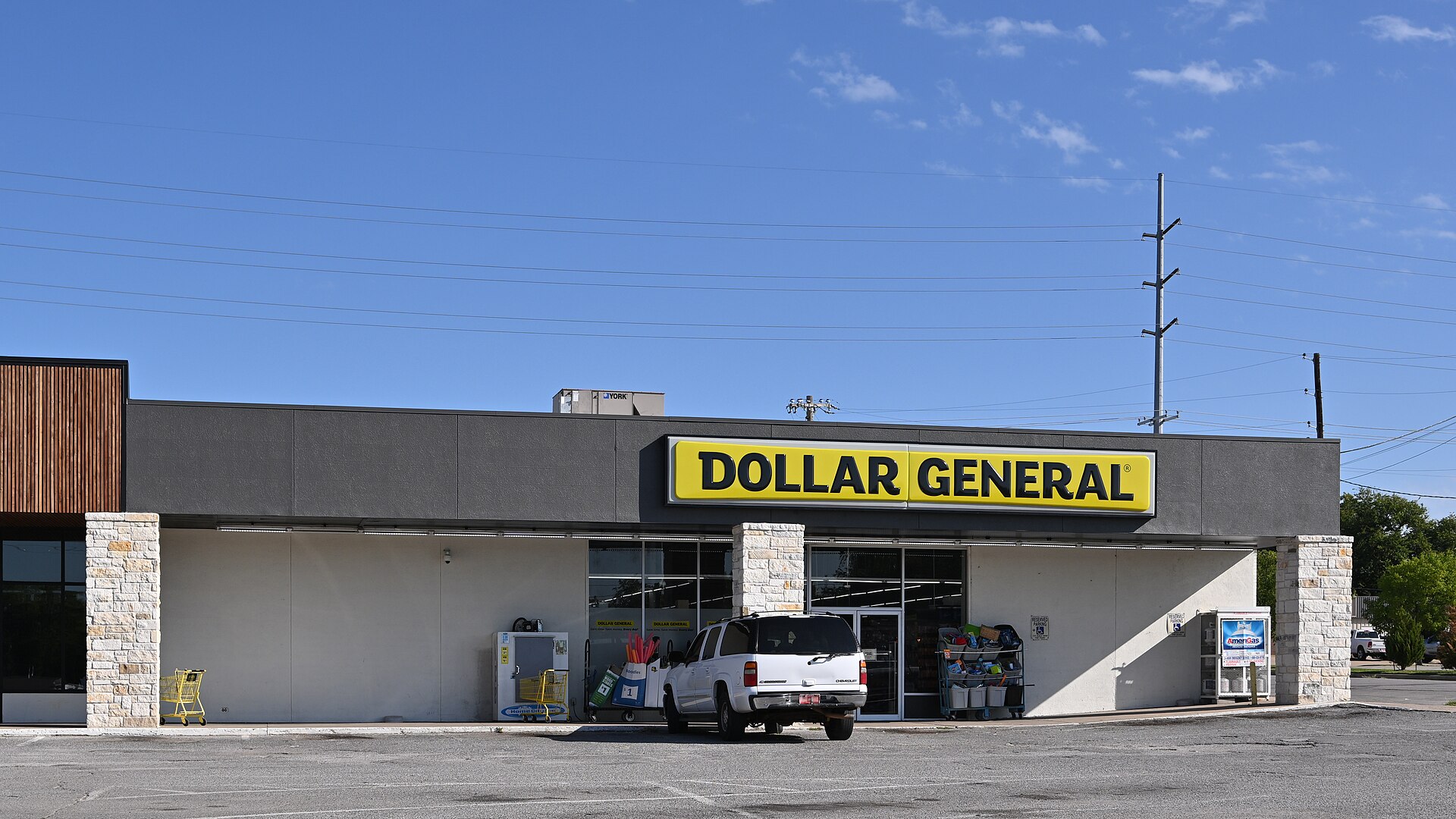
Thirty States Have Now Joined the FTC’s Lawsuit Accusing Dollar General of Charging More at the Register Than the Shelf Price
Eggs marked $5.10 on the shelf that rang up at $6.35. Milk tagged $3.95 that cost $4.25 at checkout. Those are two of the shopper complaints cited in the amended lawsuit the Federal Trade Commission filed against Dollar General on Nov. 20, 2026, and the case now has 30 states behind it.
The FTC said 10 more states joined as co-plaintiffs that day, on top of the 20 that sued with the agency in October. The lawsuit accuses Dollar General of charging customers more at the register than the prices on its shelves, tags and ads. These are allegations; the court has not ruled, and no refund program exists.
The 10 states that signed on Nov. 20
The new co-plaintiffs are Delaware, Georgia, Kentucky, Maine, Minnesota, New Mexico, Oregon, Rhode Island, South Carolina and South Dakota, according to the FTC.
They join the 20 original plaintiffs named when the FTC announced the lawsuit on Oct. 26: Alabama, Arizona, Arkansas, California, Connecticut, Florida, Illinois, Iowa, Kansas, Louisiana, Michigan, Mississippi, Nebraska, New Jersey, North Carolina, Ohio, Oklahoma, Tennessee, Utah and Wisconsin. Utah joined through its Division of Consumer Protection, according to the original complaint.
That brings the full list to 30. The Commission voted 2-0 to authorize the amended complaint, the FTC said. The case is pending in the U.S. District Court for the Middle District of Tennessee as civil action 3:26-cv-01693, according to the FTC’s case page.
29,265 complaints and four undercover shopping trips
The amended complaint says Dollar General received at least 29,265 “Did Not Honor Marked Price” complaints from Jan. 1, 2023, through March 31, 2026, from all 48 states where it operates. The company runs more than 20,000 stores, and about 80% of them are in towns of 20,000 people or fewer, the complaint says. Roughly 75% of the U.S. population lives within five miles of a Dollar General, and the company reported net sales of $42.7 billion in 2025, according to the filing.
FTC investigators also went shopping. According to the complaint, undercover purchases in early 2026 turned up mismatched prices on 13 of 58 items in Cleveland, 6 of 59 in Springfield, Missouri, 6 of 60 in Sharpsburg, Pennsylvania, and 5 of 59 in Baltimore. The net overcharges on those trips ranged from $2.60 to $4.07.
Other complaints cited in the filing involve online and app prices. A Florida shopper said the app showed Busch beer at $11.87 and the register charged $15.55, and a Mississippi shopper said Pedigree dog food listed at $24.95 on the website rang up at $29, according to the complaint.
The agencies say the company knew. The complaint alleges stores were often too thinly staffed to keep shelf labels current, and that because most price changes are increases, labels that were not updated usually led to overcharges. One former Louisiana employee is quoted in the complaint saying she “threw away [new price] tags sometimes.” The FTC’s November release says Dollar General failed to fix the problem despite extensive internal knowledge of it.
What state inspectors found
The complaint lays out state pricing inspection results from a long list of states. Among them:
- New Mexico: 53% of 73 inspections failed.
- Kansas: more than 39% of inspections failed from January 2023 to March 2026, and one store failed 44 times.
- Louisiana: 144 failed audits and $176,850 in fines.
- Kentucky: 23.97% of 242 inspections failed in 2023, and a Glasgow store had 20 of 50 items wrong, all overcharges, totaling $15.70.
- Wisconsin: 662 of 7,344 scanned products, or 9%, were overcharged in 2023, by an average of 17%.
- North Carolina: at least 1,168 pricing errors across 99 inspections of 54 stores.
The complaint also says Dollar General has reached nine settlements with eight state agencies since 2019, totaling more than $13 million. The largest was Missouri’s $5.3 million settlement in 2026, followed by New York at $1.875 million in 2026 and Pennsylvania at $1.55 million in 2025. The Colorado and Pennsylvania settlements require in-store signs promising to honor the lowest price, the complaint says.
The filing also counts eight class-action lawsuits against the company since 2022. Company policy requires employees to honor the lowest marked price, but the complaint alleges that often does not happen at the register.
What the states and the FTC are asking for
The lawsuit seeks a permanent injunction, a monetary judgment, civil penalties and other relief, according to the title of the complaint. The amended complaint lists refunds and restitution to consumers among the forms of relief sought, along with state civil penalties such as up to $25,000 per violation in Oregon and up to $2,500 per violation in California.
None of that has been ordered. The FTC notes that a complaint is filed when the Commission has “reason to believe” the law is being violated, and that the case will be decided by the court. Neither FTC release includes a response from Dollar General, and when the suit was first filed in October, the company “did not immediately return a request for comment,” according to an Associated Press report published by Fortune.
The agencies allege violations of the FTC Act, state consumer laws and the Gramm-Leach-Bliley Act. The complaint’s theory on that last law is that false price representations were used to obtain shoppers’ card and check information at checkout.
Christopher Mufarrige, director of the FTC’s Bureau of Consumer Protection, said in October, when the first 20 states sued, that “Dollar General has betrayed the trust of millions of American consumers.” The case follows Family Dollar’s $63 million settlement over the same kind of register-versus-shelf overcharges.
This article was produced with AI assistance and edited for accuracy against the sources linked above.
Image: G. Edward Johnson – CC BY 4.0/Wikimedia Commons