Dollar General Will Pay $5.3 Million to Settle Missouri’s Claims That Shoppers Were Charged More at the Register Than the Shelf Price
A pasta salad on a Dollar General shelf in east Kansas City was tagged at $3.65. At the register it rang up at $4.00. That 35-cent gap, repeated on candles, toilet paper and drink coolers across the state, is what Missouri spent more than three years in court over.
Dollar General will pay $5.3 million to settle the state’s lawsuit claiming shoppers were charged more at checkout than the shelf price, the Missouri Attorney General’s Office announced on Nov. 18. The company disputed the allegations, and the agreement resolves all of the state’s claims.
Where the $5.3 Million Goes
The money does not go back to individual shoppers. According to the attorney general’s office, $3 million goes to Feeding Missouri, the statewide network of food banks, and $2.3 million goes to the State of Missouri through the attorney general’s office.
Attorney General Catherine Hanaway explained the choice in an interview with KCTV5. She said it would be impossible to track down and refund every person who overpaid, so the parties steered the larger share to hunger relief. Hanaway told the station the state settled because a trial could have dragged the case out for years.
In the announcement, Hanaway called consumer protection a top priority and said the deal “establishes guidelines and protections so that Dollar General does not overcharge Missourians.”
The attorney general’s office called it the largest agreement any state has reached in a similar case. KCTV5 reported that the previous high among seven earlier settlements with six other states was Vermont’s $1.75 million.
What State Inspectors Found at the Register
The case began with the Missouri Department of Agriculture’s Weights and Measures inspectors, who flagged possible price-verification violations to the attorney general in 2023. When the state filed suit on Sept. 13, 2023, it said investigators had checked 147 Dollar General locations and 92 of them failed inspection.
More than 5,000 items were price-checked. The state said discrepancies ran as high as $6.50 on a single item, and the average overcharge was $2.71. The state’s announcement named everyday goods among the problem items, including candles, toilet paper, lip balm, lemonade, tire foam and drink coolers.
The petition, filed in the Circuit Court of the City of St. Louis, gave store-by-store examples. At one Kansas City location, an 18-ounce True Living scented candle was marked $5.00 and rang up at $6.00, and a tube of J-B Weld Clear Weld marked $5.00 scanned at $6.55. Inspectors there checked 50 randomly chosen items, and 6 of them were wrong.
The suit was brought under the Missouri Merchandising Practices Act, the state’s main consumer protection law. At the time, the state asked for an injunction, restitution for consumers and civil penalties.
New Rules for Nearly 600 Missouri Stores
The settlement goes beyond the payment. According to the attorney general’s office, Dollar General agreed to:
- Pay for independent third-party pricing audits of nearly 600 Missouri stores over two fiscal years, while state Weights and Measures inspectors keep making their own visits.
- Run a full-store price check of every item, at its own cost, in any store that fails three audits within 12 months.
- Fix incorrect prices within 48 hours.
- Train Missouri store managers and key carriers on its price accuracy policy within 60 days of their first store assignment.
- Post signs in Missouri stores saying customers get the lower price when the shelf and register prices differ.
That last item is the one shoppers can use right away. If a tag says one price and the receipt says another, the posted policy is that the customer pays the lower of the two. Missouri Director of Agriculture Chris Chinn said the inspection work “is critical to make sure Missourians pay an accurate price for goods.”
Hanaway told KCTV5 the state can go back to court if Dollar General breaks the agreement.
A Bigger Federal Case Is Still Open
Missouri’s deal does not end Dollar General’s pricing troubles elsewhere. In October, the Federal Trade Commission and 20 states sued the chain in federal court in the Middle District of Tennessee over the same kind of shelf-versus-register gaps, Michigan Attorney General Dana Nessel’s office said. Missouri is not part of that case.
That complaint accuses Dollar General of “unlawful overcharges” and says the company kept getting consumer complaints without fixing the problem. The other 19 states in the federal suit besides Michigan are Alabama, Arizona, Arkansas, California, Connecticut, Florida, Illinois, Iowa, Kansas, Louisiana, Mississippi, Nebraska, New Jersey, North Carolina, Ohio, Oklahoma, Tennessee, Utah and Wisconsin. The Tonic Edit reported on that lawsuit when it was filed, including the 29,265 customer complaints the FTC cited.
Dollar General’s public statement, as reported by KCTV5, addressed the federal case rather than Missouri’s. The company rejected the federal complaint’s suggestion that it had ignored its customers’ need for low prices, calling that claim untrue. The federal claims are allegations, not court findings.
How Shoppers Can Protect Their Own Receipts
None of the $5.3 million comes back to shoppers as a check, so the practical value for Missouri customers is in the new store rules. Shoppers who want to catch a mismatch at any discount chain have four simple checks:
- A phone photo of the shelf tag on higher-priced items gives proof of the posted price.
- Watching the screen as items scan, or reading the receipt before leaving, can catch a gap on the spot.
- The posted lower-price policy is the thing to point to when a tag and a scan don’t match.
- Repeat problems can be reported to the state. In Missouri, the attorney general’s office takes consumer complaints, and Weights and Measures inspectors check scanner accuracy.
Shoppers in other states have seen a similar fight end differently. Family Dollar, a separate chain, agreed to a settlement that set aside $40 million for shoppers over the same kind of pricing claims.
For Missouri, the next two years of audits will show whether the shelf price and the register price finally line up.
This article was produced with AI assistance and edited for accuracy against the sources linked above.
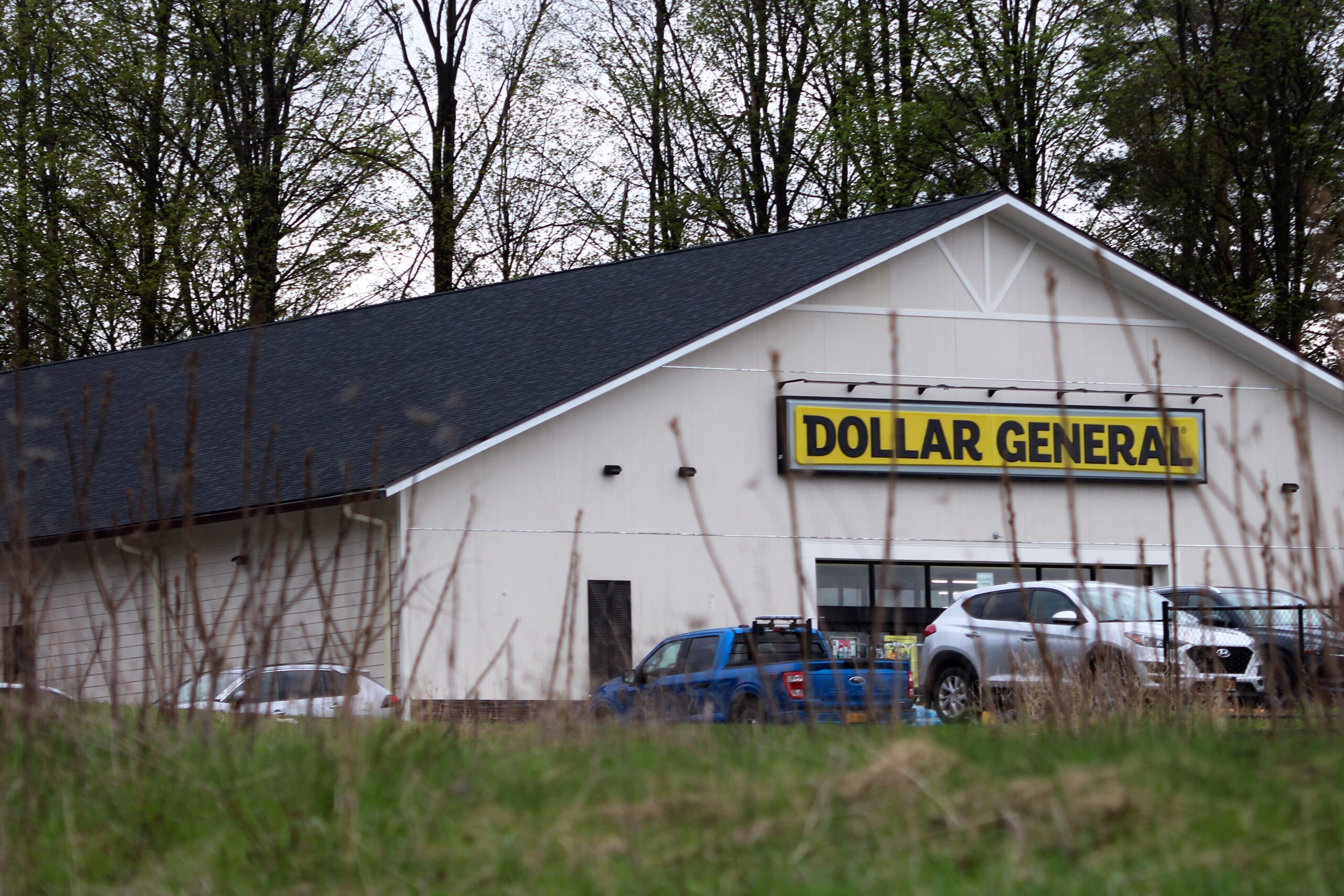
Image: Tyler A. McNeil – CC BY-SA 4.0/Wikimedia Commons