Kroger Pharmacy Customers Who Paid With Insurance Since 2018 Have Until Dec. 21 to Claim a Share of $17 Million, but One Kind of Purchase Doesn’t Count
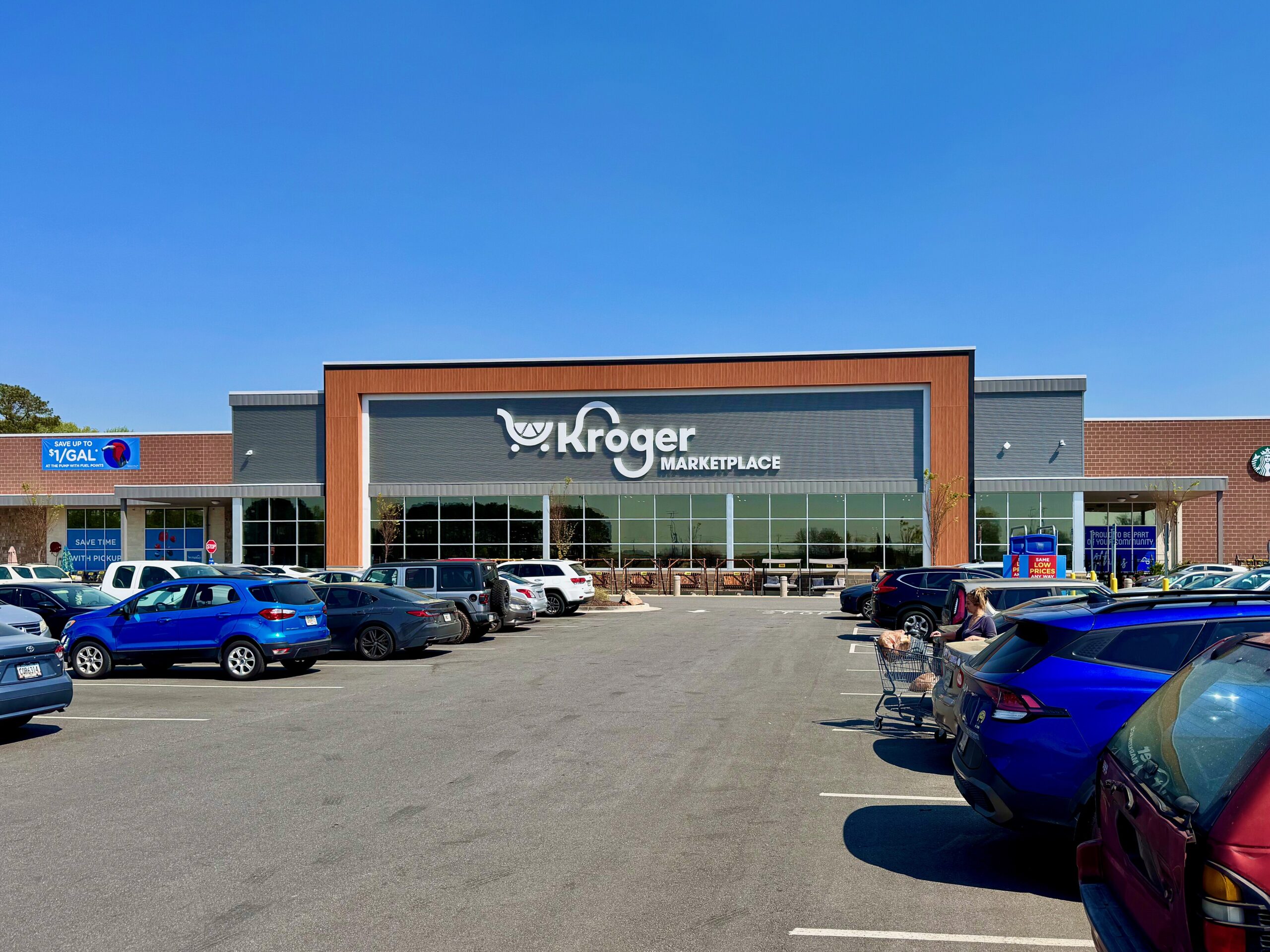
A prescription filled at a Kroger pharmacy counter over the last eight years, with an insurance card handed across, may now be worth a share of a $17 million settlement. Kroger agreed to put $17,000,000 into a settlement fund to resolve a lawsuit over how it reported its prescription prices to insurers, and claims are due Dec. 21, 2026.
The catch is in how the prescription was paid for. Prescriptions bought with cash and no insurance do not count. The official claim form covers only prescriptions filled using prescription insurance benefits, and every claimant must certify that they did not pay for all of their Kroger prescriptions without using insurance. A customer who paid entirely out of pocket with no insurance involved has no claim.
Who is in the $17 million class
The court-approved class covers “all individuals in the United States and its territories” who, at any point from Dec. 9, 2018, through Aug. 23, 2026, “paid in whole or in part for one or more prescription drugs from Kroger using their insurance,” according to the long-form notice posted on the official settlement website.
“In part” matters. A customer whose insurance covered most of a prescription and who paid a copay or coinsurance at the register is in the class. What counts toward a claim is the money the customer paid, not the share the insurer covered.
Some people are left out. The notice excludes Kroger’s officers, directors and affiliates, the judges on the case and their staff, anyone who opted out by the Oct. 22, 2026 deadline, and anyone who already sued, went to arbitration or settled with Kroger over the same pricing claims.
What the lawsuit says Kroger did
The case is Kirkbride et al. v. The Kroger Co., No. 2:21-cv-00022, in the U.S. District Court for the Southern District of Ohio. It centers on Kroger’s “usual and customary” prices, the cash price a pharmacy reports to insurers and that can affect what insured customers pay.
The plaintiffs “allege that Kroger inflated its U&C prices by not considering the prices it charged” through its Savings Club, a discount program, according to the notice. They brought claims for fraud, negligent misrepresentation and unjust enrichment.
Kroger “denies any wrongdoing.” The company maintains it correctly reported its retail prices and argues that Savings Club prices, which require an annual fee and other conditions, were not its “usual” or “customary” prices. The settlement includes no finding of liability.
Judge Algenon L. Marbley granted preliminary approval in an amended opinion and order dated June 25, 2026, finding the deal preliminarily fair, reasonable and adequate. The order describes the fund as “non-reversionary,” meaning none of the $17 million goes back to Kroger. On Oct. 2, 2026, Chief Judge Sarah D. Morrison signed an order reassigning the case to Judge Douglas R. Cole. The order does not mention any change to the hearing date.
How each share is worked out
There is no flat payment. The fund is split pro rata among valid claims after fees and costs come out, and nobody can say yet how much each person will get, because that depends on how many people file.
The claim form asks each person to estimate the total the claimant, not the insurer, paid out of pocket for Kroger prescriptions during the class period, and to pick a range. The plan of allocation then assigns each range a value:
- $1 to $500 is valued at $500
- $501 to $1,000 is valued at $1,000
- $1,001 to $4,000 is valued at $4,000
- $4,001 to $7,999 is valued at $7,999
- $8,000 or more is valued at the amount the claimant’s records prove
Those values are not payouts. Each person’s share equals their value divided by the total value of all valid claims, multiplied by the net fund. Someone in the top range would get about 16 times the share of someone in the bottom range.
Class counsel has asked for a cut of the fund. Their Oct. 6, 2026 motion requests one-third of the $17 million, or $5,666,666.66, plus $610,325.71 in costs and $5,000 each for named plaintiffs Judy Kirkbride and Beeta Lewis. The court has not ruled on that request, and notice and administration costs also come out of the fund.
Filing by Dec. 21, and what proof is needed
Online claims must be submitted, and mailed claims postmarked, “by no later than DECEMBER 21, 2026,” according to the claim form. Claims are filed through the official settlement website, which is run by the administrator, Angeion Group, and lists Dec. 21, 2026, as the claim deadline.
Most people do not need receipts up front. Claimants who estimate less than $8,000 in out-of-pocket spending do not have to submit documents with the form, though the administrator may ask for proof later. Anyone claiming $8,000 or more must attach records such as itemized receipts, cancelled checks, invoices, statements or insurance documents.
The plan of allocation also splits claimants into two groups. “Known” claimants received direct notice or appear on Kroger’s list of customers whose prescriptions were filled with insurance. “Unknown” claimants are not on that list and must provide documentation showing they paid at least the minimum of the range they picked.
Payments go out digitally unless a claimant asks for a paper check. The claim form lists PayPal, Venmo, Zelle, ACH bank transfer and virtual prepaid cards. People paid by check get 180 days to cash it, and leftover money may be redistributed to claimants no sooner than seven months after the first round.
When money could arrive
Not before the court gives final approval. The fairness hearing is set for Jan. 11, 2027, at 10 a.m. in Columbus, Ohio, according to the preliminary approval order, and the notice warns the date and time can change. Settlement Insight notes that no payments will go out until the judgment is final and any appeals are resolved.
The Kroger deal joins other recent settlements with tight year-end windows, including the Bank of America denied fraud claims settlement due Dec. 11 and the California Google Android settlement due Dec. 5. FinanceBuzz also lists the Kroger settlement among the claim deadlines closing before the end of the year.
This article was produced with AI assistance and edited for accuracy against the sources linked above.
Image: Harrison Keely – CC BY 4.0/Wikimedia Commons