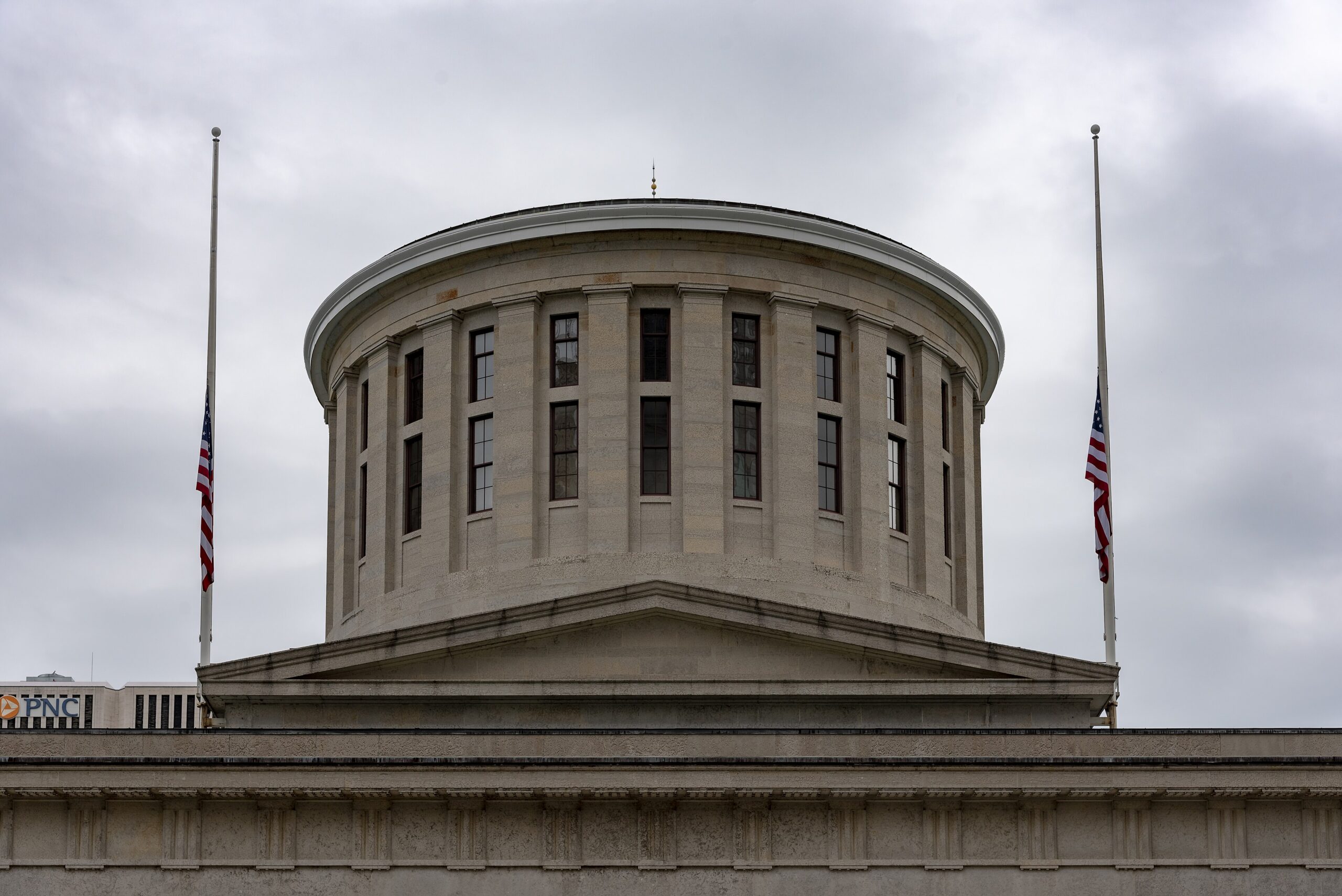
128,843 Fewer Ohioans Are on Food Stamps Than a Year Ago, Dropping the State to 1.32 Million Recipients
“SNAP is a vital support, but it’s designed to supplement income, not replace it,” Ohio Department of Job and Family Services Director Matt Damschroder said in January, as the state prepared to apply new federal work rules to more food stamp recipients. By July, Ohio had 128,843 fewer people on SNAP than a year earlier.
The state’s rolls fell from 1,446,062 in July 2025 to 1,317,219 in July 2026, or about 1.32 million people, according to a U.S. Department of Agriculture table with data as of Oct. 9. That is an 8.9% decline, smaller than the 13.3% drop nationwide.
Twelve months, 128,843 fewer Ohioans
All of Ohio’s yearly decline had already happened by June. USDA’s table shows the state at 1,317,208 recipients in June 2026 and 1,317,219 in July, a gain of 11 people and a monthly change the agency rounds to 0.0%. Elsewhere the slide kept going: Virginia fell 1.1% and New York 2.0% in that single month, according to the same table.
The federal agency says its June and July numbers are preliminary and could be revised significantly, so the flat month may not hold once final figures come in.
Ohio’s own counts run lower. The state’s Caseload Summary Statistics Report for May 2026, published by ODJFS, listed 1,281,674 people receiving SNAP in 667,154 households that month. The state and federal reports are compiled separately and don’t match exactly, but both show a program that has shrunk well below the roughly 1.45 million people enrolled a year earlier.
Ages 55 to 64 now have to show 80 hours
The biggest change for Ohio recipients this year was who has to work. In a Jan. 7 announcement carried by the Toledo Legal News, ODJFS said the expanded federal requirements would take effect Feb. 1, 2026, with recipients required to show they were meeting them starting March 1.
The rules now reach adults ages 55 to 64 and parents whose children are 14 to 18, groups that were not covered before. Veterans, people experiencing homelessness and young adults aging out of foster care also lost their automatic exemptions. Those covered generally must work or take part in qualifying education or training for at least 80 hours a month.
“Recent changes in federal law will soon mean more SNAP recipients will be subject to work requirements,” Damschroder said. The department steered recipients to SNAP Employment and Training through county Job and Family Services offices and local OhioMeansJobs centers, along with the ApprenticeOhio paid-training program.
OhioMeansJobs centers offer free career counseling, resume help, job search workshops and computer access, the department said. Its OhioMeansJobs.com site lets job seekers search openings, post resumes and use a budget calculator. ApprenticeOhio combines paid on-the-job training with classroom instruction in fields such as construction, health care, information technology and advanced manufacturing.
The June reversal for Ohioans in their early 60s
Ohio’s first reading of the rules drew pushback from a state lawmaker. On June 18, Rep. Sean Patrick Brennan, D-Parma, said ODJFS had issued new guidance after the USDA’s food assistance agency clarified the federal law on June 11. The clarification dealt with the time-limit provisions of the One Big Beautiful Bill Act, the 2025 law behind the new work rules.
Under the revised guidance, Ohioans ages 60 to 64 who qualify for a general work-requirement exemption, such as caring for an incapacitated person, are also exempt from SNAP’s time limits. Brennan, who had raised the issue before the legislature’s Joint Committee on Agency Rule Review, asked the department for data on how many people in that age group had benefits reduced, suspended, denied or ended under the earlier reading.
“If vulnerable residents were improperly denied food assistance, Ohio should proactively identify them, notify them, and ensure they receive every benefit to which they are entitled,” Brennan said.
$51 million now, a 5% share later
The state’s costs are rising even as the caseload falls. Starting in October 2026, states pay 75% of SNAP’s administrative costs instead of 50%, which adds $51 million to Ohio’s share, according to Summit County’s breakdown of the federal changes. Summit County alone picks up $2.1 million of that, on top of the $3.6 million it already sends to the state. Ohio’s 88 counties run SNAP day to day through their Job and Family Services offices, so the administrative shift lands on county budgets as well as the state’s.
The larger bill depends on Ohio’s payment error rate. Beginning in October 2027, states with rates of 6% or higher must cover part of SNAP benefit costs for the first time. Summit County estimated Ohio would owe $316 million a year if its error rate stayed at 9%.
It did not stay there. Ohio’s fiscal 2025 rate came in at 6.76%, with 5.10% in overpayments and 1.66% in underpayments, according to USDA’s state error-rate table. That 2.25-point drop from the year before was among the five largest improvements in the country, and it left Ohio well under the national rate of 10.62%, Ballotpedia reported.
At 6.76%, Ohio lands in the lowest paying tier, where states cover 5% of benefits instead of 10% or 15%. States may use either their 2025 or 2026 error rate for the first year, so a fiscal 2026 rate below 6% could erase the benefit cost share for that first year.
Summit County notes that the funding changes themselves do not require any action from recipients. The work rules do. For the 1.32 million Ohioans still enrolled, enrollment in SNAP Employment and Training runs through county Job and Family Services offices or a local OhioMeansJobs center, according to ODJFS. Other states have posted larger losses, from Michigan’s 208,492 to about 234,000 in Pennsylvania.
Get stories like this by email. Sign up for The Parent Diaries Letter.
This article was produced with AI assistance and edited for accuracy against the sources linked above.
Image: Sixflashphoto – CC BY-SA 4.0/Wikimedia Commons