Bill Gates Says Charity Can’t Be the Safety Net as AI Reshapes Work, and Governments Will Need to Tax Billionaires
“The primary responsibility of dealing with inequality will always rest with governments,” Bill Gates said in a recent interview with the Financial Times, according to a Fortune report published Nov. 6. The Microsoft co-founder added that the world “can’t expect philanthropy, which is voluntary in nature, to be the safety net.”
The comments came as Gates argued that artificial intelligence will concentrate wealth and that tax systems will have to adapt. They fit a line he has been building for months, from an August essay on taxing robots to a foundation that plans to spend itself out of existence.
What Gates said about taxes
Fortune quotes Gates saying: “So, in a world of AI, there will have to be changes in tax systems, including the ability to tax people with huge wealth.” Fortune reads that as a case for taxing billionaires, and the exact words, quoted here as he said them, put the ability to tax people with huge wealth at the center of it.
The report notes that the top 1% of Americans own more than half of the stock market, so gains from AI are likely to flow mainly to them. Gates’s argument, as Fortune describes it, is that governments should tax wealth progressively and that individuals can then decide how much to donate. He still called wealthy donors “a very enlightened group” once those taxes are in place.
Fortune does not date the Financial Times interview, and the remarks it quotes describe a direction rather than a specific rate or bill.
The fortune he says he is giving away
Fortune reports that Gates decided early last year to give “virtually all” of his wealth, about $100 billion, to the Gates Foundation, with the only condition that the money be spent within 20 years. The foundation’s May 8, 2025 announcement put the larger number at $200 billion in spending over those 20 years and said operations will end in 2045, a plan approved by amending the foundation’s charter.
In a Gates Notes post the same day, Gates wrote that the foundation will close on Dec. 31, 2045 and that he expects it to spend more than $200 billion between then and now. He also wrote that governments including the United States, United Kingdom and France are cutting aid budgets by tens of billions of dollars, and that philanthropy cannot make up that gulf in funding.
A January 2026 foundation release set the annual payout at $9 billion and capped operating costs at $1.25 billion, about 14% of the budget. About 70% of spending goes to global health, with the rest mostly supporting education in the United States and agriculture in low- and middle-income countries.
The August essay on robots and payroll taxes
Gates laid out a more specific tax idea in an Aug. 26 essay. He argued that employers pay payroll taxes on the workers they hire but can usually write off the purchase of a robot right away, a difference he said nudges companies toward replacing people with machines. His proposal was to tax AI tokens and robots, with the revenue funding retraining and the safety net. He acknowledged critics who call the idea economically inefficient and called it part of a wise response.
The essay also warned that the jobs most at risk from AI are entry- and mid-level ones, that the disruption could unfold over about a decade, and that the new jobs will mostly require skills that take years to learn. It cited a Stanford study finding that employment fell for young workers in jobs vulnerable to replacement after generative AI spread. Gates called for a stronger, more flexible social safety net and said solutions should come from a public democratic process.
What is still open
Nothing in the Fortune report describes a bill, a rate or a threshold, and no government has proposed a tax built on Gates’s remarks. His position puts a donor on record saying that voluntary giving is not a substitute for public spending, a view that sits alongside other billionaires’ public statements about taxes, such as Warren Buffett’s comparison of what Berkshire Hathaway pays and a 99% giving pledge by Mark Zuckerberg.
Fortune’s report ran amid a stock market drop that it says wiped billions from the net worths of the world’s wealthiest people, though it notes economists still expect AI to drive major wealth gains in the coming years.
This article was produced with AI assistance and edited for accuracy against the sources linked above.
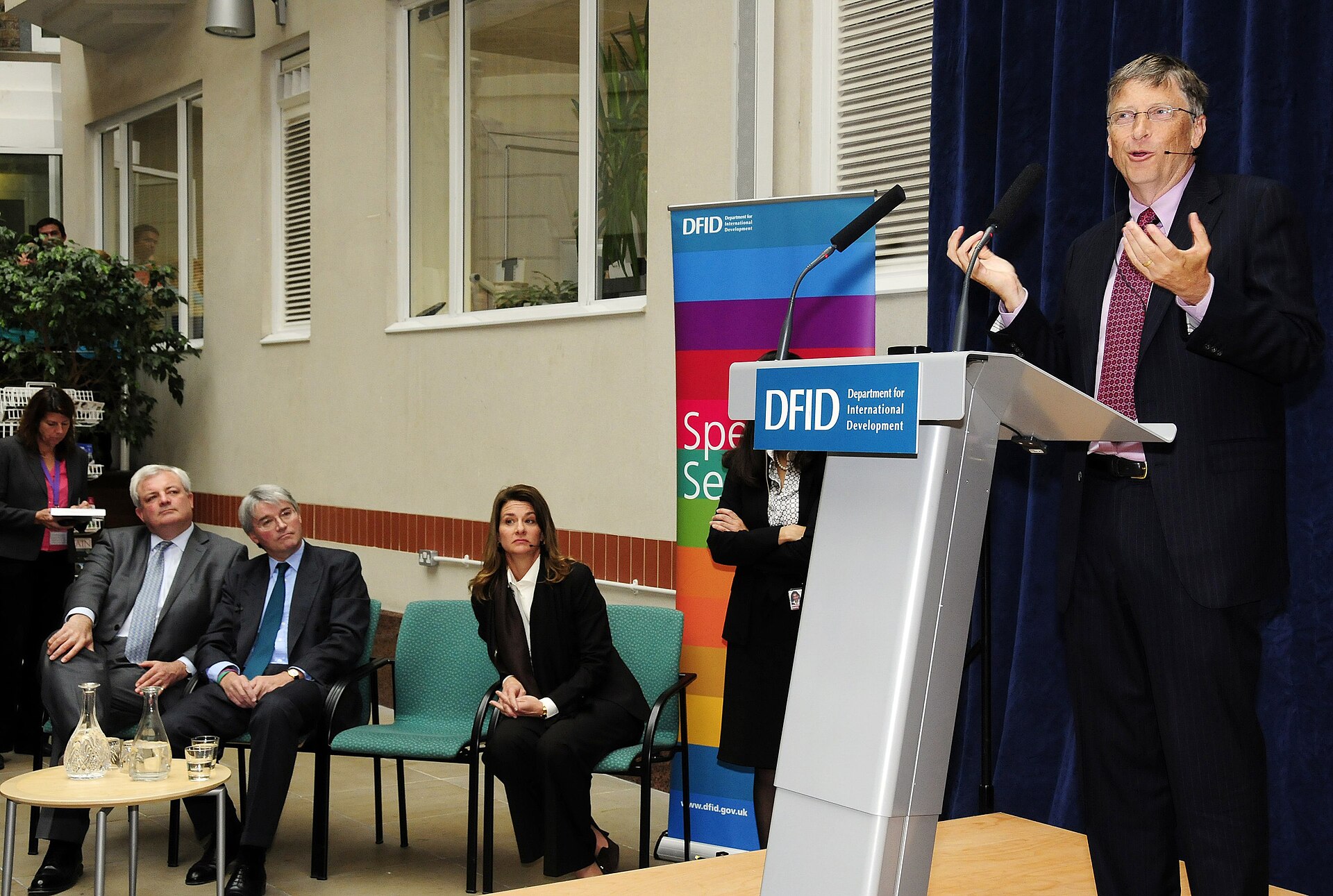
Image: DFID – UK Department for International Development – CC BY 2.0/Wikimedia Commons