Kaiser Permanente Members Who Filed Privacy Settlement Claims Are Being Paid Now, With Checks Estimated at $20 to $40
An email from [email protected] may look like spam this week, but for about 755,551 Kaiser Permanente members who filed claims, it is a settlement payment. The administrator of Kaiser’s website tracking settlement says the money is now going out.
The official settlement website posted a status update dated Nov. 20, 2026: “Distribution checks and electronic payment emails have been sent.” The site says the payment emails come from that ChoicePay address, and it puts the payments at an estimated $20 to $40 each.
Who is getting paid
The money goes only to members who filed a claim. The settlement covered Kaiser members in California, Colorado, Georgia, Hawaii, Maryland, Oregon, Virginia, Washington and Washington, D.C., who used the logged-in pages of Kaiser’s websites or mobile apps between November 2017 and May 2024. Claims had to be submitted by March 12, 2026.
The class was enormous, but most people in it did not file. In a July 14 order granting final approval, federal District Judge Edward M. Chen of the Northern District of California counted about 13.1 million class members, based on 13,134,307 records. About 755,551 of them filed claims, roughly 5.7%. The order said each claiming member should receive about $40.
The same order noted that about 139,534 class members never received notice of the settlement. Members who did not file a claim by the March deadline are not part of this distribution, according to the settlement site.
Where the money came from
The class action, filed against Kaiser Foundation Health Plan, accused Kaiser of running third-party tracking code on its websites and apps. According to ClassAction.org’s summary of the case, the tools allegedly let outside companies, including Google, Microsoft and Twitter, now X, collect identifying information, patient status, medical histories and messages with health care providers.
Kaiser denied wrongdoing. ConsumerAffairs quoted the settlement site as saying Kaiser “denies any claims that it misused patient data” and settled “to end the burden, expense, and uncertainty of further litigation.” ConsumerAffairs also reported that the separate lawsuits were combined into one class action in December 2024.
Lawyer Monthly reported that the case did not involve hackers or stolen patient files, and that members who stayed in the class gave up the right to sue Kaiser separately over the same issues.
How the fund was split
The settlement started at $46 million and was written so it could grow to as much as $47.5 million. Judge Chen’s order says the fund reached the full $47.5 million based on the final opt-out count.
Several costs came out before members were paid:
- Attorneys’ fees: Class counsel asked for 33%, about $15.68 million. The judge awarded $13 million, which matched the lawyers’ hours-based fee figure through May 2026.
- Litigation expenses: $598,431, approved as requested.
- Service awards: $5,000 for each named plaintiff, $40,000 in total.
The order also shows that 22,599 class members opted out and 19 objected. A separate fee request from the objectors’ lawyers was denied. Any leftover money is set to go to the Privacy Rights Clearinghouse, which the court approved as the backup recipient over another proposed group.
Because each payment is a share of what remains, the final figure depends on that math. The settlement site’s estimate of $20 to $40 and the court’s figure of about $40 per claimant describe the same pool.
What to watch for
Payments arrive in one of two ways, according to the settlement site: a paper distribution check or an electronic payment email. Members who picked an electronic option should look for the email from [email protected], including in spam folders, and follow its steps to collect.
The administrator is Strategic Claims Services, which lists its phone number as 1-855-783-3816. Anyone who filed a claim and has not seen a check or email can use that number or the settlement website to ask about it. The settlement site does not say how long checks stay valid, so depositing one promptly is the safer course.
Scammers often copy settlement emails. A genuine payment from this settlement does not require a fee, and the address listed on the official settlement site is the one to rely on.
Why the payout is small
Privacy cases like this one spread a fixed fund across a very large group, which keeps individual payments modest even when the total sounds big. Here, a $47.5 million fund shrank by more than $13.6 million in fees, expenses and awards before it was divided among roughly three-quarters of a million claimants.
The site has covered other cases where claims or payments are still pending, including the $177 million AT&T data breach settlement and Columbia University’s breach settlement.
For Kaiser members who filed, the process is over. The court approved the deal in July, the claim period closed in March, and as of Nov. 20 the money is on its way.
This article was produced with AI assistance and edited for accuracy against the sources linked above.
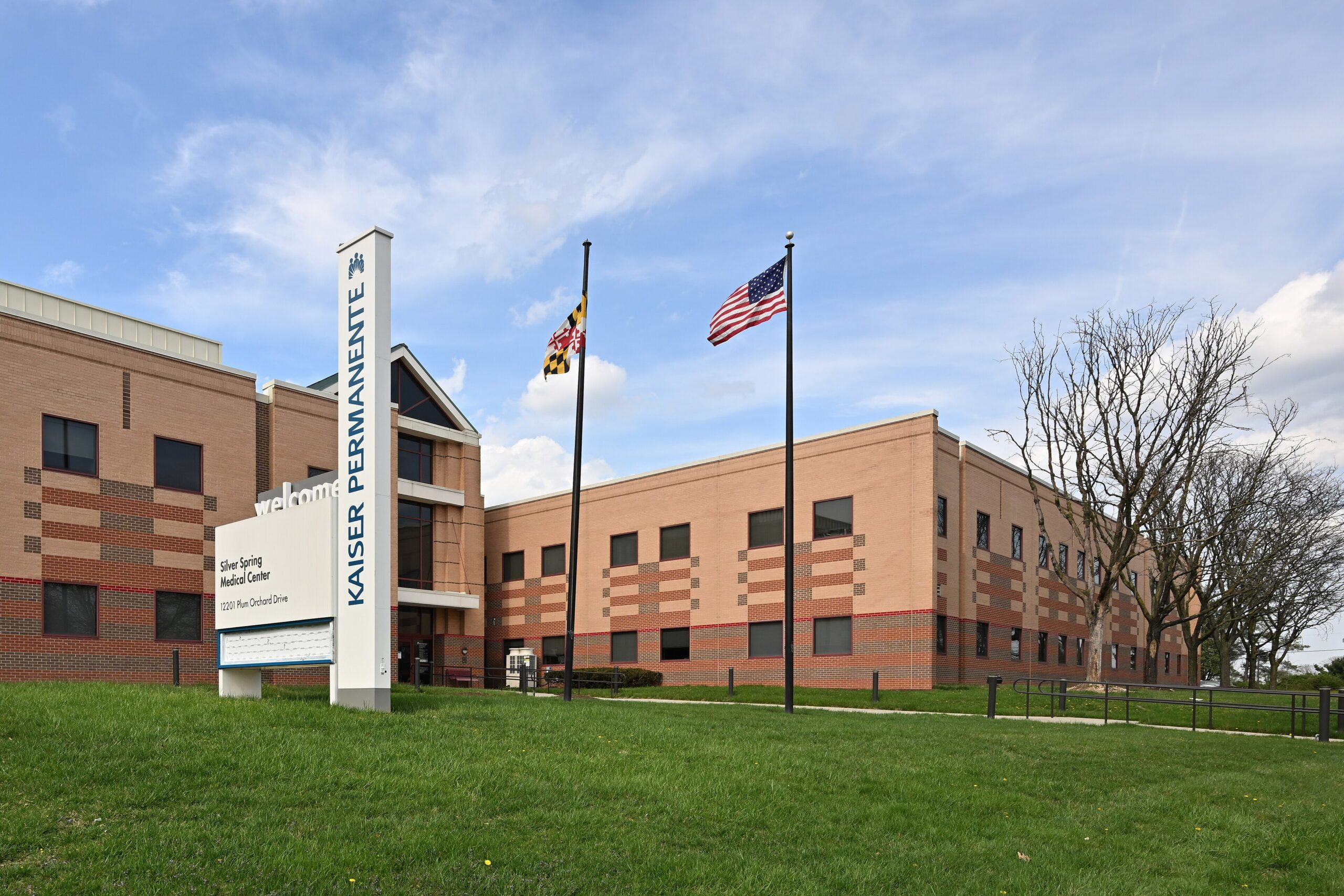
Image: G. Edward Johnson – CC BY 4.0/Wikimedia Commons