What Happens to an IRS Late Penalty for a Taxpayer With Three Clean Years? Starting With 2025 Returns, the IRS Waives It Automatically
Filing or paying late has long meant a penalty notice first and a phone call to the IRS second. For taxpayers with a clean record, that order is changing. Under a program the IRS calls the Automatic Exemption from Penalty, penalties for failing to file, failing to pay and failing to deposit are not assessed at all for people who filed and paid on time in the three prior years.
The IRS announced the change in IR-2026-83 on July 8, saying the relief applies to eligible original returns beginning with tax year 2025 and that “taxpayers do not need to take action to receive this relief.” The returns most people file next spring, for tax year 2026, fall under it.
What the Automatic Exemption Covers
The program covers three penalties. On its administrative penalty relief page, updated Oct. 22, the IRS says it “won’t assess penalties for failure to file, failure to pay, or failure to make a deposit” for eligible taxpayers.
The test is the taxpayer’s history. A person qualifies by having filed on time and paid any tax due for the three prior years. For businesses and others that file quarterly returns, the lookback is 12 consecutive quarters, the IRS says.
The relief starts with 2025 individual returns and 2026 quarterly returns, and covers later periods too, according to the agency. It does not reach information returns, or returns filed only for specific or infrequent events, such as Form 706 for estate tax and Form 709 for gift tax.
Why It Replaces First Time Abate
The new program takes over from First Time Abate, the long-standing relief that removed a first penalty but generally had to be requested. Under First Time Abate, a taxpayer with three years of timely compliance could call the number on a notice, send a written statement or file Form 843 to ask for the penalty to come off, the IRS says.
That older route was already fairly simple. The IRS says a First Time Abate request did not have to name the program or include supporting documents, because the agency reviewed the account itself, and that it automatically reduced or removed the interest tied to any penalty it took off.
The Automatic Exemption skips that step. If a taxpayer qualifies, the IRS applies the relief during processing and sends a notice confirming it, according to the July release.
The IRS’s comparison of the two programs shows another difference: under the automatic exemption, the failure-to-pay penalty does not accrue in the first place, while under First Time Abate unpaid tax could keep building that penalty until it was paid in full.
The handoff is gradual. The IRS began phasing out First Time Abate in summer 2026, and the automatic exemption fully replaces it for eligible returns with original due dates on or after Jan. 1, 2027. During the transition, some qualifying taxpayers may still get penalty notices for eligible 2025 returns and 2026 quarterly returns, and the IRS says they can contact the agency to request First Time Abate.
What Still Has to Be Paid
The exemption removes penalties, not the tax itself. The IRS says taxpayers still owe any unpaid tax and interest, plus any penalties the program doesn’t cover.
That makes the program a cushion for a late return, not a payment plan. A taxpayer who files late and can’t pay the balance still has a bill, and the IRS says the interest on it is still owed.
The clean-history test looks at whether returns were filed and tax was paid on time in each of the three prior years. The administrative relief page says that for First Time Abate, a past penalty that was later removed for reasonable cause or IRS error does not count against the taxpayer.
Options for Taxpayers Who Don’t Qualify
People without a clean three-year record can still ask for relief based on reasonable cause, the IRS says, and the agency reviews each request and notifies the taxpayer of the outcome.
On its reasonable cause page, the IRS lists examples that can qualify:
- fires, natural disasters or civil disturbances;
- inability to get records;
- death, serious illness or unavoidable absence of the taxpayer or immediate family; and
- system issues that delayed a timely electronic filing or payment.
The same page says relying on a tax preparer, not knowing the rules, simple mistakes and lack of money generally don’t qualify on their own. Requests can be made by calling the number on the notice, or in writing on Form 843, with an explanation of what happened and documents such as hospital records or proof of a disaster.
The Taxpayer Advocate Service’s summary of the Taxpayer Bill of Rights adds that every penalty notice must explain the penalty, the legal authority for it and how it was calculated, and that people facing significant hardship from a penalty can seek the advocate’s help. The same summary says taxpayers can ask the IRS to remove any amount assessed in error or beyond what the law requires.
The change came as the IRS reported a record year. Scripps News reported that the agency collected $5.6 trillion in fiscal 2026 and cited the automatic penalty program among its changes. The site has also covered IRS deadline relief for 62 Texas counties. For a taxpayer with three clean years, a late return filed in 2027 is set to bring a relief notice instead of a penalty.
This article was produced with AI assistance and edited for accuracy against the sources linked above.
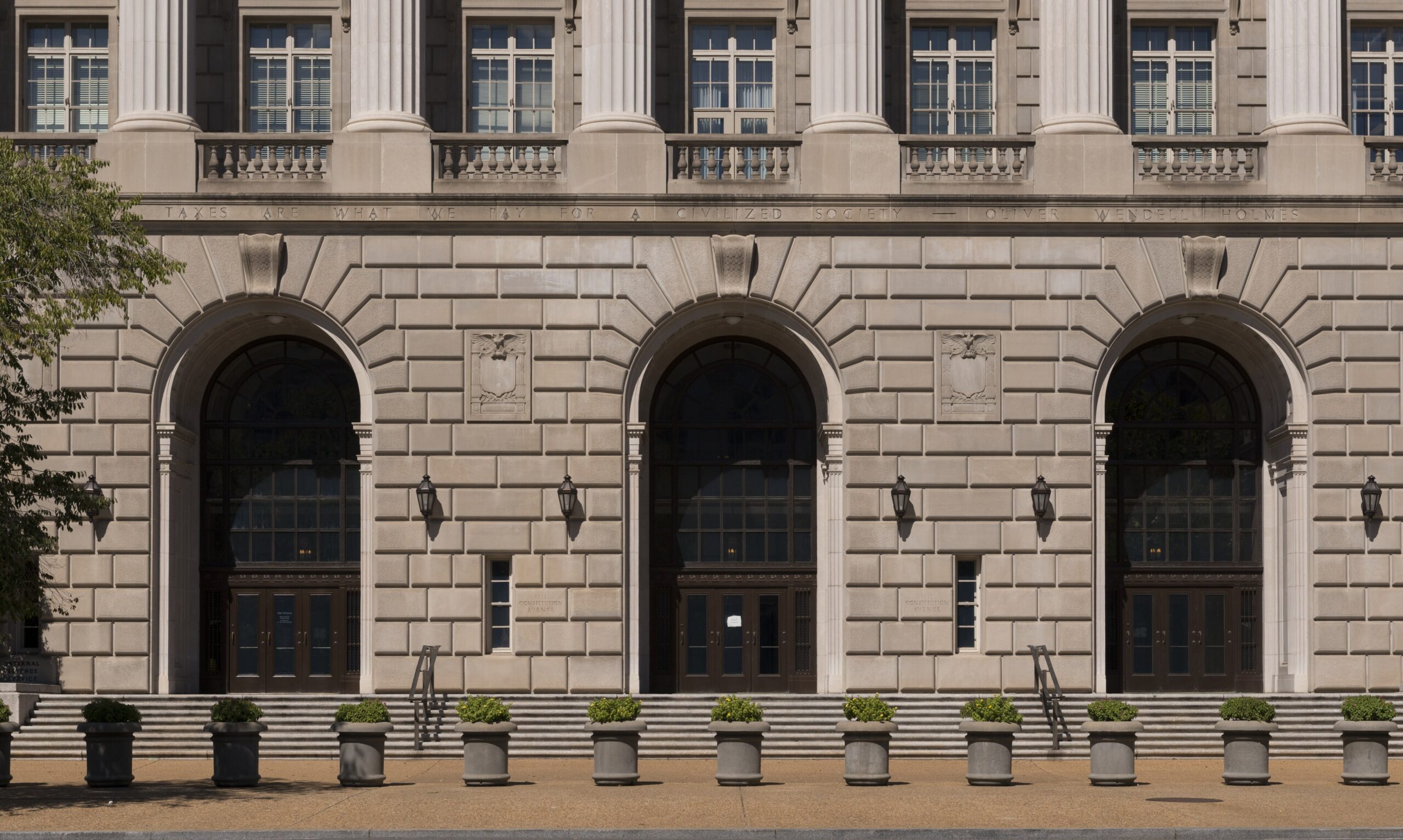
Image: Carol M. Highsmith – Public domain/Wikimedia Commons