Berkshire Hathaway Is Sitting on $377.4 Billion in Cash After Buying Back $9.6 Billion of Its Own Stock Last Quarter
Berkshire Hathaway finished September with $377.4 billion in cash and Treasury bills, a cushion that grew even as the company spent $9.6 billion buying its own shares in the quarter. The numbers come from the conglomerate’s third-quarter report, which it said in a Nov. 4 notice would be posted online Saturday morning, Nov. 7.
The quarter also carried a less flattering detail: earnings from the businesses Berkshire owns outright slipped.
Where the $377.4 billion sits
Berkshire’s quarterly filing breaks the pile into three buckets as of Sept. 30. The insurance and other group held $36.0 billion, the railroad, utilities and energy group held $4.7 billion, and the rest, $336.7 billion, was short-term U.S. Treasury bills.
That adds up to about $377.4 billion. A wire report carried by ABC News put the total at $365.5 billion at the end of June, which means the pile grew by roughly $12 billion over the summer.
Treasury bills are short-term loans to the federal government that mature within a year, so almost all of this money can be redeployed quickly if Berkshire finds something it wants to buy. For now, the filing shows it is mostly waiting.
$9.6 billion of buybacks in three months
Berkshire’s Nov. 7 earnings release says the company bought back about $9.6 billion of its own stock in the third quarter and about $14.4 billion so far this year. The filing puts the quarter’s exact figure at $9,647 million.
The pace changed sharply during 2026. The filing’s equity statement shows buybacks of $235 million in the first quarter and $4.5 billion in the second, so the third quarter was roughly double the previous one.
The filing also spells out when Berkshire is allowed to buy. Repurchases happen only when the CEO, after consulting the chairman, believes the price is below the company’s intrinsic value. There is no cap on shares and no end date, and the company will not buy if it would push its cash and Treasury bills below $30 billion. Berkshire is not required to repurchase any particular amount.
The wire report said the buying appears to have stopped recently, after the Class A share price rose above $878,000, which is higher than where it traded before Warren Buffett announced his retirement plans in May 2025. That is the reporter’s reading of the pattern; Berkshire’s documents do not say when the buying paused.
A buyback shrinks the number of shares outstanding, so each remaining share represents a slightly larger slice of the same company. That is the case management makes for repurchases when it believes the stock is cheap, and it is why the filing frames the decision around intrinsic value rather than a dollar target.
Profit fell, and the cause depends on which measure is used
Net earnings attributable to shareholders came in at $22.1 billion for the quarter, or $15,502 per Class A share, down from $30.8 billion, or $21,413 per share, a year earlier. The release shows investment gains of $9.4 billion this quarter against $17.3 billion in the same period of 2025, and most of the drop traces to that swing.
Berkshire has long told shareholders to pay more attention to operating earnings, which leave out gains and losses on investments. Those were $12.7 billion, compared with $13.5 billion a year earlier, a decline of nearly 6%. Four analysts surveyed by FactSet had expected $8,821.84 per Class A share, and the company reported $8,907, so the result still beat forecasts, according to the wire report.
Over the first nine months of the year, the picture is better. Operating earnings reached $37.0 billion, up from $34.3 billion, and net earnings were $57.9 billion, up from $47.8 billion, according to the release.
Insurance is the soft spot
Insurance underwriting profit across all of Berkshire’s insurers fell to $1.35 billion from $2.37 billion a year earlier, the release shows. Insurance investment income also dipped, to $2.7 billion from $3.2 billion. Float, the premiums Berkshire holds before claims are paid, stood at about $178.5 billion.
The wire report said Geico earned $982 million, down from $1.77 billion a year earlier, and quoted CFRA analyst Cathy Seifert saying premiums are declining while claim costs rise. Investor Chris Ballard told the outlet Geico is spending more on advertising to win customers, which squeezes margins.
Other businesses are carrying more weight. Seifert said Precision Castparts, the utilities and BNSF railroad are doing better than the insurers, despite a year without major hurricanes. The businesses that “play to Greg’s strengths” are doing well, she said, a reference to Greg Abel, who took over as CEO from Warren Buffett in January.
What the stockpile means for ordinary investors
Berkshire’s filing ties its buyback program to one test, whether the price is below intrinsic value, and says nothing about a target for the cash. Taken together, the numbers show Berkshire adding to its cash while also buying back stock at a faster clip; the documents do not say what acquisitions, if any, management is weighing.
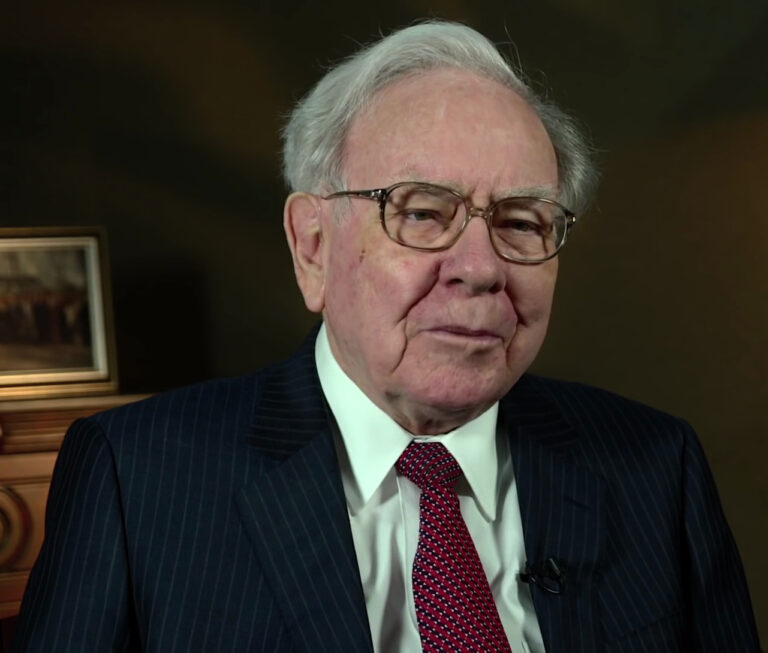
Shareholders are not owed a payout from this money; it helps them only if it is later invested well or used to retire shares. For background on the man who built the company, see this earlier report on Buffett’s roughly $142 billion fortune. The company posts its full documents on its 2026 news releases page, where the third-quarter report and the earnings release are both available.
The next quarterly report, covering the final three months of 2026, will show whether the company kept buying its own shares or let the pile grow further.
This article was produced with AI assistance and edited for accuracy against the sources linked above.
Image: JNOJ1423 – CC0/Wikimedia Commons