Virginia Workers Move to a $13.75 Minimum Wage on Jan. 1, and State Law Already Sets $15.00 for 2028
The Code of Virginia now spells out three consecutive hourly rates for the state’s minimum wage: $12.77 for 2026, $13.75 for 2027 and $15.00 for 2028. Virginia moves to the middle rate on Jan. 1, and the $15.00 step is already written into Section 40.1-28.10, so no further vote is needed to reach it.
The schedule came from two bills signed in April, HB 1 and SB 1, which rewrote the statute that sets the wage floor for most hourly workers in the state.
Three Rates, Three Dates in the Statute
The statute sets $12.77 an hour, or the federal minimum if higher, for the period from Jan. 1, 2026 to Jan. 1, 2027. It sets $13.75 for Jan. 1, 2027 to Jan. 1, 2028, and $15.00 for Jan. 1, 2028 to Jan. 1, 2029. The legislature’s online code updates page cites the section as amended by 2026 Acts chapters 350 and 351, which correspond to HB 1 and SB 1.
The federal minimum is not a competing number in practice. The U.S. Department of Labor’s state minimum wage table lists Virginia at $12.77 today and the federal minimum at $7.25, so the state figure controls for workers covered by the law.
The steps are uneven. The move from $12.77 to $13.75 is 98 cents, about 7.7%. The move from $13.75 to $15.00 is $1.25, about 9.1%. Over the two years, the rate rises $2.23, or 17.5%, from the 2026 level.
For a worker on a 40-hour schedule, the 2027 rate yields $550 a week, compared with $510.80 at $12.77, a difference of $39.20. At 2,080 hours a year, $13.75 comes to $28,600, and $15.00 comes to $31,200. That is roughly $2,383 a month at $13.75 and $2,600 a month at $15.00, with the 2028 step adding $50 to a 40-hour week. Those figures are calculations from the statute’s rates and do not account for taxes or unpaid time off.
The April 9 Signing of HB 1 and SB 1
Governor Abigail Spanberger signed the minimum wage legislation on April 9, according to her office’s release that day. It names Del. Jeion Ward as the sponsor of HB 1 and Sen. L. Louise Lucas as the sponsor of SB 1, and it lists the same schedule: $12.77 in effect since Jan. 1, 2026, $13.75 on Jan. 1, 2027 and $15.00 on Jan. 1, 2028.
Both bills came out of the General Assembly’s 2026 session, according to the Littler summary of the year’s wage and hour laws.
Spanberger said in the release that the signing puts more money in the pockets of Virginia workers. She also said that people who work full time in Virginia should be able to afford to live in the state.
Spanberger signed a package of bills that day. Along with the wage measures, it included workforce measures on offshore wind jobs, apprenticeships for high school students and a state internship coordinator. The release gives effective dates only for the wage schedule.
The coverage details come from Virginia Business, which reported that the increases cover most hourly and domestic workers. It listed exclusions for upper management, administrative and professional staff, outside sales personnel, minors under 16 and short-term trainees. It also reported that tipped employees subject to tip-credit rules are not covered by the increases.
Farm Workers Come Under the Minimum in January
A companion measure changes who gets the minimum at all. Farm laborers and farm employees have historically been excepted from Virginia’s wage floor, according to a summary by the law firm Littler, published through Legal 500. HB 20 and SB 121 remove that exception, so employers must pay the state minimum to those workers beginning Jan. 1, 2027.
The governor’s release describes those two bills as requiring farm workers to be paid the state minimum wage, and names Del. Adele McClure and Sen. Jennifer Carroll Foy as their sponsors. Virginia Business also reported that the 2027 increase applies to farm workers.
The Littler summary lists other wage changes with later dates that depend on reenactment in the 2027 General Assembly session. One would put the state, its agencies and political subdivisions under the same minimum wage and overtime standards as private employers. Another would remove the overtime exemption for domestic service workers on July 1, 2028. Neither changes the $13.75 or $15.00 rates.
After 2028, the Rate Follows Inflation
The $15.00 rate is the last fixed step. Under the statute, the Commissioner must set an adjusted rate by Oct. 1, 2028, and every year after that, for the 12 months beginning the next Jan. 1. The new rate equals the current rate plus a percentage that matches the increase in the CPI-U, the Consumer Price Index for all items for all urban consumers, as published by the Bureau of Labor Statistics.
As an illustration of the formula, not a forecast, a 3% rise in the CPI-U would carry $15.00 to $15.45.
The statute says an adjustment “shall not be less than zero,” so the wage cannot fall if prices do. The first indexed rate takes effect Jan. 1, 2029. The Littler summary says only that annual increases after 2028 are set by the state’s Department of Labor and Industry and that the law does not specify the amount in advance.
One other part of the statute remains unchanged. Trainees in an approved on-the-job or other training program of up to 90 days are paid the greater of the federal minimum or 75% of the Virginia minimum. At $13.75, that works out to $10.31 an hour in 2027, a calculation from the statute’s percentage.
This article was produced with AI assistance and edited for accuracy against the sources linked above.
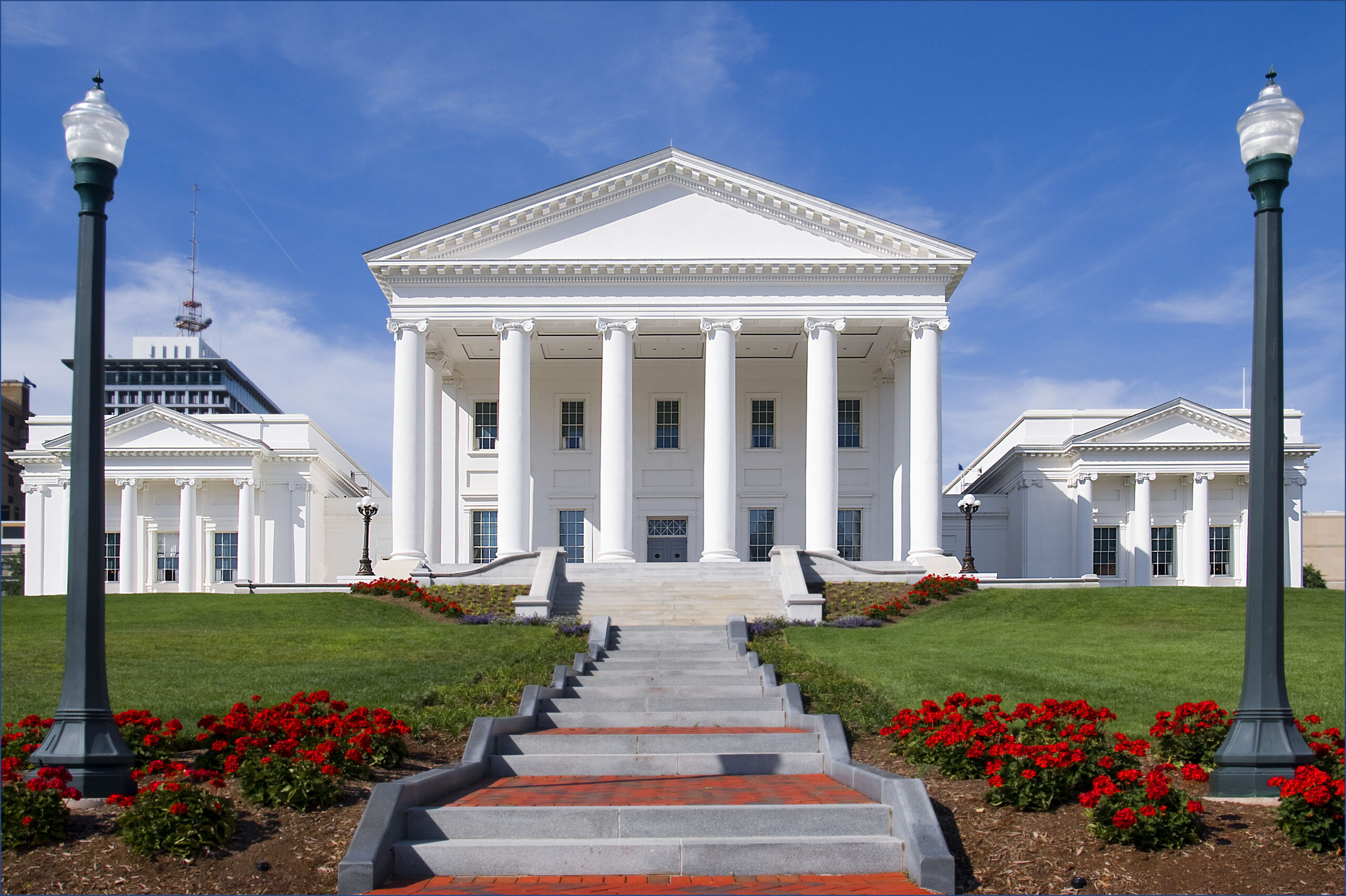
Image: Ron Cogswell – CC BY 2.0/Wikimedia Commons