Texas Has 2.8 Million People on SNAP, Its Fewest Since 2009, After the Steepest One-Year Drop in Two Decades
Grocery budgets in Texas are being stretched by a program that is shrinking faster than at any time in a generation. About 2.8 million Texans were enrolled in the Supplemental Nutrition Assistance Program in September, the fewest since August 2009, according to state data reported by The Texas Tribune.
That count is 20.8% lower than in September 2025. The Tribune, citing Texas Health and Human Services Commission figures, called it the steepest year-over-year decline in two decades.
How the Texas numbers compare with a year ago
Federal figures tell the same story. The U.S. Department of Agriculture’s state-by-state SNAP participation table shows Texas with 3,446,051 people on SNAP in July 2025 and 2,762,213 in July 2026, a drop of 683,838 people. That is the largest numeric decline of any state in the table.
The number of Texas households getting benefits fell from 1,579,527 to 1,305,124 over the same months, according to the agency’s household table. Monthly benefits paid in the state fell from $625,221,101 in July 2025 to $498,972,370 in July 2026, according to its benefits table. That is about $126 million less in food aid flowing into Texas grocery stores in a single month.
The July 2026 federal figures are preliminary. The USDA’s SNAP data page, last updated Oct. 20, says the latest month is subject to significant revision.
Among the largest states, the gap is wide. The same table shows Florida down 629,600 people, from 2,849,239 to 2,219,639, and California down 356,057, from 5,449,432 to 5,093,375. California still has nearly twice as many SNAP recipients as Texas, even though Texas is the second-most-populous state.
Nationally, the same table counts 41,603,048 people on SNAP in July 2025 and 36,087,667 in July 2026. Texas accounts for about one in eight of the people who left the program over that year. Households nationwide fell from 22,350,446 to 19,636,409, the household table shows.
Children make up most of the drop
The Tribune reported that children are the largest group of Texas SNAP recipients, at about 1.4 million, and that they account for more than half of the losses since September 2025. The number of children under 5 on SNAP in Texas is the lowest in more than 20 years, the report said, and enrollment has fallen in every age group.
Eligibility still turns largely on income. A family of four in Texas qualifies on up to $4,421 a month, according to the Tribune’s report.
Celia Cole, chief executive of the food bank network Feeding Texas, told the Tribune the declines are not happening because people no longer need help or have found work.
What changed in the rules
The One Big Beautiful Bill Act, signed in July 2025, rewrote parts of SNAP. According to the Tribune, it made some groups ineligible, including refugees, and many lawfully present immigrants lost eligibility. It also extended work requirements to parents of children 14 and older and to adults up to age 64. Before the law, the work rule applied to adults without children under 54.
The state commission has not said what is driving the drop. Guillermo Zenizo Lindsey, an HHSC assistant press officer, told the Tribune the new federal mandates require thorough case reviews.
The site has tracked the same pattern in other states, including Louisiana’s 23% decline and Nevada’s loss of nearly 1 in 4 recipients.
Applications are taking longer
The slowdown is not only on the eligibility side. HHSC processed 64% of SNAP applications on time in September, meaning within 30 days, down from 91% a year earlier, the Tribune reported. Federal rules require states to process 95% on time, and states that fall short risk losing federal money.
The same staff review SNAP and Medicaid applications, and advocates told the Tribune that the state’s push to cut its error rate has created a backlog. Diana Forester of Texans Care for Children said the backlog is leaving eligible families without help.
That error rate has a price tag. Texas’ SNAP payment error rate is nearly 9%, the Tribune reported, and if it does not fall below 6%, the state could face up to $2 billion in added costs over the 2028-2029 budget cycle. HHSC Executive Commissioner Stephanie Muth has made lowering the rate her top budget priority, according to the report.
Where the drop shows up
The loss of $126 million a month in benefits does not stay inside households. SNAP dollars are spent at grocery stores, and Melissa Crager of the East Texas chain Brookshire Brothers told the Tribune that reduced SNAP spending is affecting rural communities in that part of the state.
For families still enrolled, the USDA figures show the average benefit has held fairly steady. Dividing July 2026 benefits by recipients gives about $181 per person for the month, compared with about $181 in July 2025.
For families who left the program, the change is the full amount. The Tribune noted that enrollees typically stay on SNAP for about a year on average.
Get stories like this by email. Sign up for The Parent Diaries Letter.
This article was produced with AI assistance and edited for accuracy against the sources linked above.
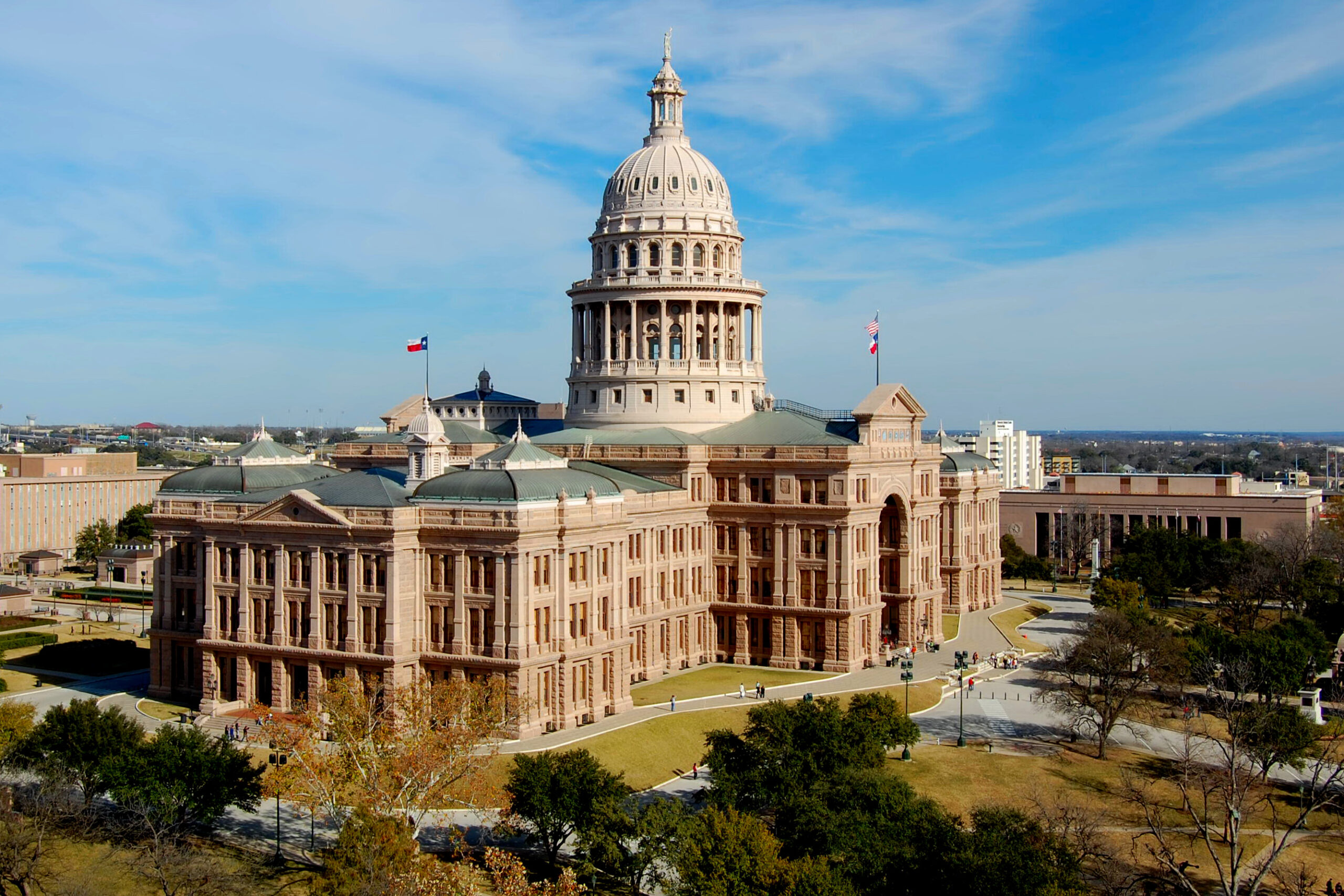
Image: LoneStarMike – CC BY 3.0/Wikimedia Commons