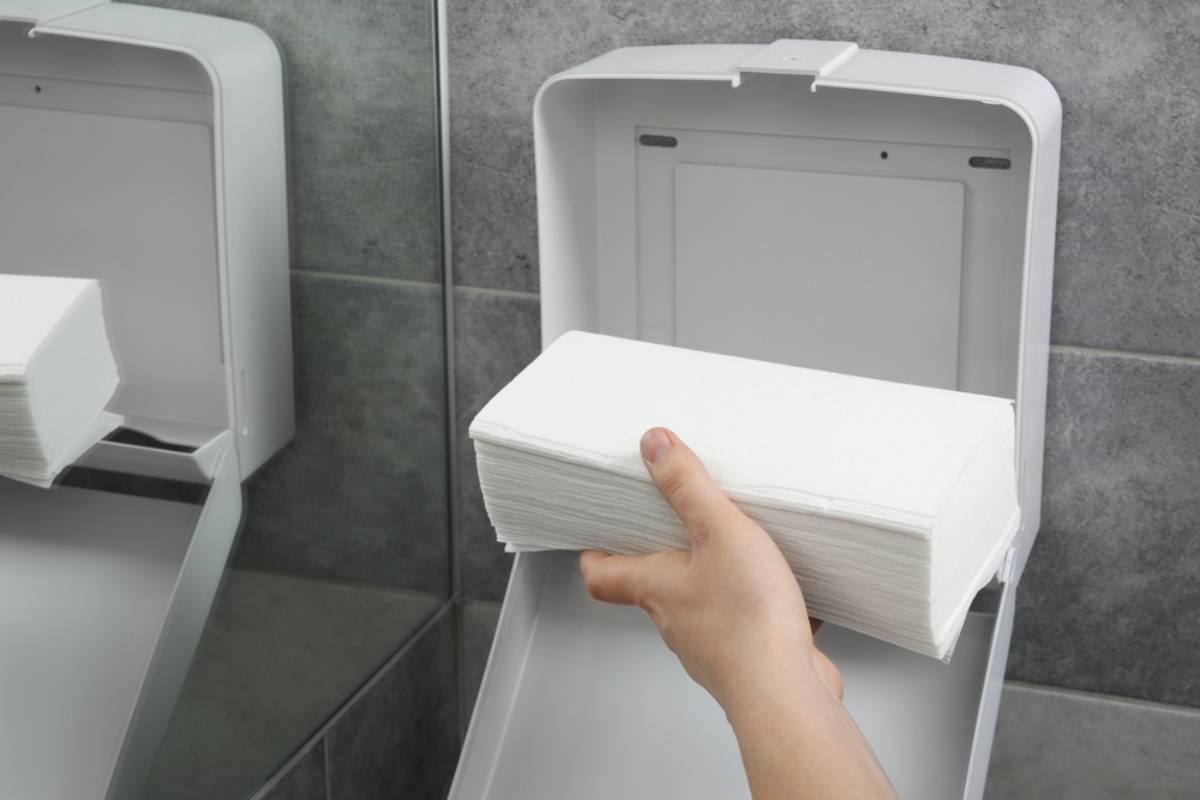
Essity CEO Says Americans Are Eating Out Less Than Europeans, and the Change Is Hitting an Unexpected Business: Restaurant Paper Towels
Americans cutting back on restaurant visits are creating a challenge for a business that diners rarely think about: the companies supplying restaurants with paper towels and other hygiene products. In a Reuters report published October 22, 2026, Essity CEO Ulrika Kolsrud said the Swedish hygiene products company was experiencing greater weakness among its American restaurant customers than among its European ones. The trend has become visible in the company’s latest financial results, with sales, volumes and prices all declining in its Professional Hygiene business during the third quarter.
Kolsrud attributed the difference partly to how often consumers visit restaurants, saying Americans are not dining out as much as Europeans. Her comments came as rising prices and a slowing labor market put additional pressure on U.S. household budgets. Although Essity’s results do not mean every restaurant is struggling, they show how changing consumer habits can affect businesses far removed from the customer’s table.
The company behind the paper towels
Essity is a Swedish health and hygiene products company with operations spanning consumer tissue, personal care, healthcare products and professional hygiene. Its Professional Hygiene business sells products such as Tork paper towels to restaurants and other commercial customers. That makes the business sensitive to changes in demand from companies that purchase hygiene supplies for their customers, employees and facilities.
According to Essity’s third-quarter financial report, the company operates through four business areas: Health & Medical, Personal Care, Consumer Tissue and Professional Hygiene. Each division serves different markets, which means a slowdown in one category does not automatically translate into weaker performance across the entire company. The latest results illustrate that distinction, with some businesses continuing to grow while others faced more difficult conditions.
Why the U.S. market matters
The American market is particularly important to Essity’s Professional Hygiene business. Reuters reported that the unit generates approximately 40% of its revenue in the United States, leaving it exposed to changes in commercial demand across the country. When restaurants and other customers become more cautious about spending, suppliers can feel the effects through their orders and pricing.
That exposure helps explain why Kolsrud singled out the difference between American and European restaurant activity. A business serving multiple countries can experience very different conditions depending on local customer habits and economic pressures. Essity’s remarks indicate that the U.S. market has become a more challenging environment for this part of its operations, even as its European customers have shown comparatively greater resilience.
The third-quarter warning signs
The clearest indication of trouble appeared in Essity’s Professional Hygiene results. According to Reuters, the division recorded declines in sales, sales volumes and prices during the third quarter, while the company also reported higher costs of goods sold. Selling fewer products at lower prices while facing higher costs can put pressure on a business’s profitability.
Essity’s own report offered a more nuanced assessment of the situation. The company said Professional Hygiene remained profitable, although its volume performance was unsatisfactory, with weakness concentrated in its base product assortment and among smaller distributors. It also reported growth in strategic products and increased sales to larger distributors and customers, showing that the downturn was not affecting every part of the business equally.
Essity’s overall results tell a more complicated story
Despite the difficulties in Professional Hygiene, Essity’s total reported sales increased during the third quarter. Net sales reached 36.06 billion Swedish kronor, an increase of 4.1% from the 34.638 billion kronor reported for the same period in 2025. However, the company’s organic sales growth was negative 0.3%, reflecting a decline in underlying performance before the effects of factors such as currency movements and acquisitions.
The company also reported a lower profit for the quarter. Profit for the period fell to 2.346 billion kronor from 3.358 billion kronor a year earlier, according to its financial report. These figures show why rising reported revenue does not necessarily mean a company is experiencing stronger underlying demand or improving profitability.
Gallup’s numbers reveal a longer decline in weekly dining
Essity’s warning about restaurant activity coincides with a broader change in American dining habits. A Gallup survey published October 21, 2026 found that 39% of American adults ate at restaurants at least once a week in July 2026, down from 53% in 2019. The 14-percentage-point decline marked the lowest level in Gallup’s tracking of weekly restaurant dining.
The figures also show that the recovery in dining frequency following the pandemic did not continue indefinitely. The share of Americans eating out weekly reached 47% in 2022 before falling to 39% in the latest survey. Although the poll cannot explain every consumer’s decision, it provides independent evidence that frequent restaurant dining has become less common than it was before the pandemic.
Most Americans have not stopped eating at restaurants
The Gallup findings do not suggest that restaurants have become irrelevant to American households. Instead, they point toward fewer visits, with 37% of adults reporting that they ate at restaurants once or twice a month and another 20% saying they did so less often. Only 4% reported never eating at a restaurant.
That distinction matters when interpreting the pressure on Essity. Consumers can continue visiting restaurants while doing so less frequently than before, creating a different pattern of demand for businesses that supply those establishments. Gallup measured reported dining frequency rather than restaurant purchasing volumes, so its survey supports the broader trend without directly measuring the impact on Essity’s customers.
Takeout has not completely replaced restaurant visits
Eating restaurant food at home has not fully compensated for the decline in frequent dining out, according to the same Gallup survey. The share of Americans ordering takeout or delivery at least weekly stood at 31% in 2026, compared with 35% in 2019 and 39% in 2021. Those results suggest that fewer weekly restaurant visits are not simply being replaced by an equivalent increase in takeout habits.
For restaurant suppliers, the distinction between dining in and ordering food to go can matter because different purchasing needs are involved. Some customers may shift toward delivery, while others may decide to spend less on restaurant meals altogether. The Gallup data do not establish precisely how much these changes affect individual suppliers, but they help explain why businesses serving the food-service industry are watching consumer habits closely.
Inflation has moved faster than hourly pay
The economic backdrop provides another reason households may be reassessing discretionary spending. The U.S. Bureau of Labor Statistics’ September inflation report showed that consumer prices were 3.7% higher than a year earlier. By comparison, average hourly earnings increased by 3.0% over the same 12-month period, according to the agency’s employment data.
That gap means average hourly pay did not keep pace with the overall increase in consumer prices during the period. The inflation report also recorded a 0.6% monthly increase in consumer prices in September, with gasoline prices rising 9.1% and accounting for more than half of the monthly increase in the overall index. These figures do not establish why any particular household reduced restaurant visits, but they show the cost pressures present while Essity’s American customers were experiencing weaker demand.
A slower labor market adds uncertainty
The U.S. employment picture offered little indication of a rapid acceleration in hiring during September. The Bureau of Labor Statistics’ September jobs report recorded an increase of just 29,000 nonfarm payroll jobs, while the unemployment rate remained at 4.2%. Employment changed little across the major industries covered in the report.
A softer labor market can make consumers more cautious about committing money to nonessential purchases, particularly when other household expenses are rising. For restaurants, that can mean competing more aggressively for customers who have become selective about where and how often they spend. Essity has not quantified how much of its Professional Hygiene decline was attributable to consumer dining habits alone, so the jobs figures provide economic context rather than a definitive explanation for its results.
Household financial pressure is not the same for everyone
The wider financial picture is more complicated than a straightforward story of Americans becoming poorer. The Federal Reserve’s 2025 Survey of Consumer Finances, released in October 2026, found that real median family income increased 7% between 2022 and 2025, reaching $82,200. Real median family net worth also rose 2% over the same period, reaching $215,900.
Those nationwide figures do not mean every household experienced the same improvement. The Federal Reserve reported that families lower in the income and net-worth distributions saw more modest income gains than families higher in those distributions. In a separate Federal Reserve report on household economic well-being published in May 2026, rising prices remained the most common financial concern, while worries about finding or keeping a job increased compared with the previous year.
Other restaurant suppliers are reporting pressure, too
Essity is not the only company facing signs of weaker demand from American food-service businesses. A Business Insider report on restaurant supply companies noted that Finland-based Huhtamaki, which produces disposable cups and takeout containers, reported declining North American sales in its second quarter. Analysts cited in the report also warned that weaker consumer spending at U.S. fast-food chains could hurt demand for its products.
The comparison is useful because the two companies sell different kinds of supplies but serve customers that include restaurants and other food-service businesses. Weakness across these categories suggests that changes in restaurant activity can affect multiple parts of the supply chain. However, quarterly results also reflect factors such as product mix, pricing and regional conditions, so the developments do not establish a single cause for every company’s performance.
Restaurant sales can rise even when customers visit less often
One apparent contradiction complicates the picture: American restaurant sales have continued to increase even as surveys show consumers dining out less frequently. The National Restaurant Association’s October sales report said eating-and-drinking-place sales reached $92.9 billion in September 2026, up 7% from a year earlier. It was the industry’s eighth consecutive month of sales growth.
Those figures measure total spending rather than the number of visits made by individual customers. Higher prices and spending patterns can help lift dollar sales even when people eat out less often, meaning that stronger industry revenue does not necessarily signal stronger customer traffic. The Association’s separate restaurant operator survey found that 46% of operators reported lower customer traffic in August compared with a year earlier, while 43% reported higher traffic.
Price increases create a difficult balancing act
Essity has responded to higher operating expenses by pursuing price increases across its business areas. The company’s third-quarter report said selling prices were higher in every business area than in the second quarter, following earlier price reductions in some categories. Management has also emphasized cost savings and efficiency improvements as it works to offset pressure from raw materials, energy and other expenses.
Raising prices can help a supplier recover higher costs, but it also creates a challenge when customers are already looking for ways to control their spending. Restaurants facing weaker traffic may become more sensitive to the cost of supplies, making it harder for vendors to pass through every increase without affecting demand. Essity has not said that its pricing measures have fully offset the weakness in Professional Hygiene, leaving the balance between profitability and customer demand an important issue.
Other Essity businesses offer a partial cushion
The company’s other divisions provide some context for why the restaurant-related weakness has not defined its entire quarter. Essity reported organic growth in Health & Medical, supported by continued expansion in incontinence products and positive performance in medical solutions, including wound care. Personal Care also performed well, while Consumer Tissue recorded lower sales because of reduced volumes and earlier price reductions, with production-footprint optimization in Latin America contributing to the volume decline.
The mixed results illustrate the importance of looking beyond one business line when assessing a large consumer-products company. Healthcare, personal care, household tissue and commercial hygiene products operate in different markets and respond to different purchasing decisions. Essity says it is prioritizing growth opportunities, efficiency improvements and price adjustments as it works to translate its market position into stronger profitability.
The bigger lesson for suppliers may be hiding in everyday habits
Essity’s results provide a practical example of how changes in consumer behavior can spread through the economy. A household deciding to eat out less may appear to be making a small personal budgeting choice, but restaurant traffic can influence purchasing decisions made by businesses that supply paper products, disposable containers and other necessities. When several suppliers report weaker demand, the effects become harder for companies to dismiss as isolated problems.
The evidence does not show that every American is cutting restaurant spending or that dining frequency alone explains Essity’s financial performance. It does show that weekly restaurant visits have declined from their pre-pandemic level, while inflation, slower hiring and pressure on commercial customers complicate the outlook. For Essity, the immediate challenge is to manage costs and prices while protecting demand in a U.S. market where consumers appear to be choosing their restaurant visits more selectively.