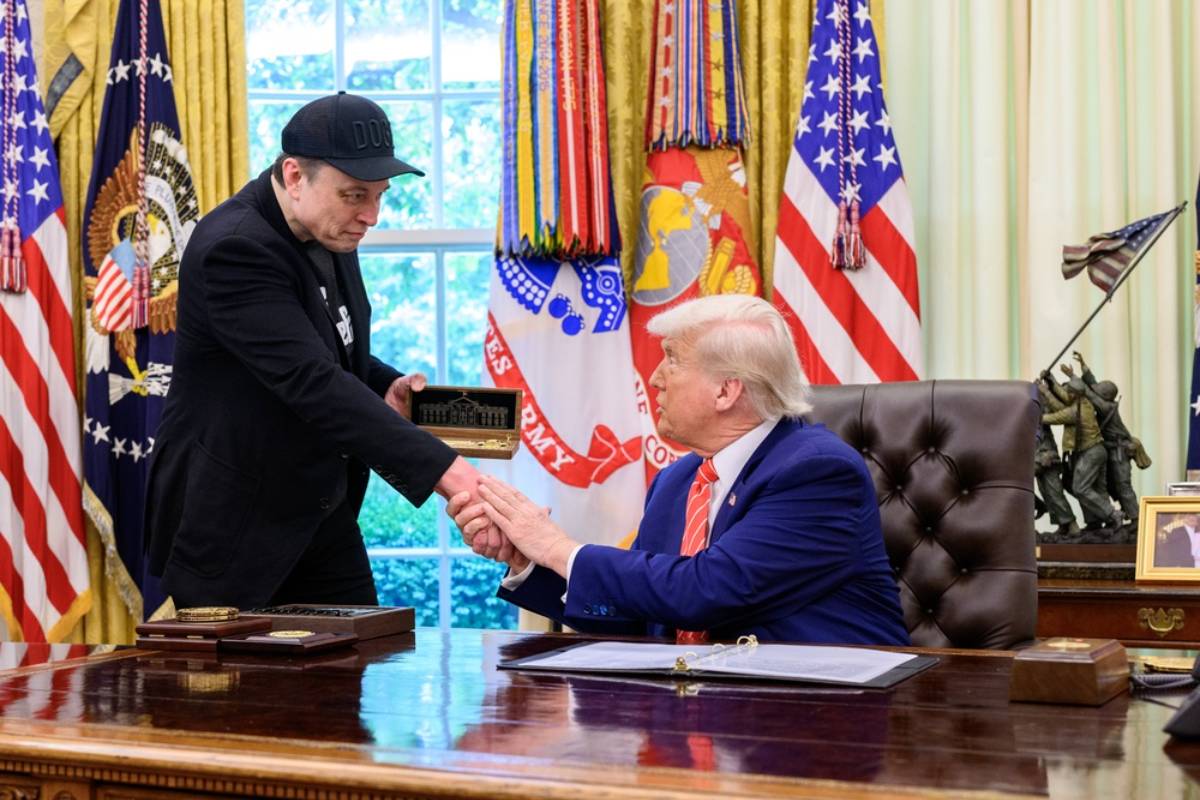
Elon Musk Pledged a SpaceX Share to Every American Child in 2027, and His Billion-Dollar Gift Could Give Trump’s New Investment Accounts a Major Test
Elon Musk has promised to give a share of SpaceX to every child in America next year, turning an enormous personal fortune into a proposed gift that could reach tens of millions of young people. The announcement has attracted attention not only because of its scale, but also because the distribution is expected to use the federal government’s new Trump Accounts program. In its October 21 report, CNBC examined the connection between Musk’s proposed stock giveaway, SpaceX shares, and the investment accounts created for American children.
The pledge comes at a time when wealthy business leaders are exploring different ways to distribute some of their companies’ value beyond their immediate shareholders. Musk’s proposal stands out because it centers on giving individual children an ownership stake rather than directing a contribution solely to a charitable organization. However, the announcement is still a promise about a future distribution, and important questions about eligibility, timing, and implementation remain unresolved.
The Announcement Began With a Short Social Media Post
On October 19, 2026, Musk announced his intention to distribute one of his SpaceX shares to every child in America during 2027. In the post, he described the proposed gift as the first of many, without explaining what other contributions might follow. Reporting by Axios confirmed that the announcement did not specify exactly who would qualify or how the shares would reach recipients.
The timing also attracted attention because the announcement followed a separate initiative from artificial intelligence company Anthropic to dedicate part of its equity to a public-benefit fund. Musk had argued in response to that initiative that shares should go directly to the public, and his subsequent pledge offered a concrete example of that approach. Although the sequence is documented, Musk has not publicly provided a complete plan explaining how the proposed nationwide transfer will work.
The Estimated Value Could Exceed $10 Billion
The financial scale of the proposed giveaway helps explain why it immediately became a major business story. With roughly 72 million children under 18 in the United States and SpaceX shares trading at $146.03 at the close on October 16, the proposed distribution would represent approximately $10.5 billion in stock at that price. That estimate, reported by Axios, is a snapshot based on the number of potential recipients and the share price at the time, not a guaranteed value for the eventual gift.
The total could change before the promised distribution begins because the market value of SpaceX shares can fluctuate. The final amount would also depend on how many children actually qualify and whether the program follows Musk’s broad wording literally. Until the eligibility rules and transfer arrangements are announced, the multibillion-dollar figure remains an estimate rather than a confirmed donation total.
Trump Accounts Offer a Way to Deliver the Shares
President Trump publicly connected Musk’s proposal to Trump Accounts on October 19, thanking him for contributing SpaceX stock for American children through the program. In its report on Trump’s response, the Washington Examiner also reported that Treasury Secretary Scott Bessent said more than $8 billion had already been deposited into children’s accounts. Bessent said Musk’s pledge would push that total higher, although he did not provide a final value or distribution schedule.
This public acknowledgment made Trump Accounts the clearest stated route for the proposed gift, rather than separate payments made directly to families. It did not, however, confirm that the shares had already been transferred. The distinction between a pledge and a completed contribution remains central to understanding the announcement.
The Accounts Have Rules That Families Need to Understand
Trump Accounts are a special type of individual retirement account created for eligible children, with a parent or guardian serving as custodian until the child turns 18. The Internal Revenue Service’s official eligibility guidance says a child generally qualifies with a valid Social Security number if they will not turn 18 before the end of the calendar year in which the account is established. The program also provides a one-time $1,000 federal contribution for eligible U.S. citizens born between January 1, 2025, and December 31, 2028.
These accounts are designed for long-term saving and investment, rather than functioning as ordinary bank accounts that families can freely spend from during childhood. Parents or guardians can claim accounts created through automatic enrollment to manage them. For Musk’s proposal, that existing structure could offer a way to distribute shares across a large number of children’s accounts through a single program.
Treasury Already Has a Process for Accepting Stock Donations
Federal officials established a mechanism for accepting company shares before Musk made his announcement. In a July 2 announcement, the Treasury Department said eligible philanthropists could contribute approved, readily tradable public-company stock to support Trump Accounts. The process allows qualifying stock to be distributed under donor instructions, applicable law, and Treasury guidance.
That policy gives Musk’s proposal an existing administrative framework, but it does not remove the need for specific paperwork and account allocation. The rules require the donated shares and the proposed group of beneficiaries to satisfy particular requirements. An established mechanism makes the plan more practical, but the scope and implementation of Musk’s specific pledge still need to be settled.
The Rules Could Keep Donated Shares Locked Up for Years
Temporary Treasury and IRS regulations published on September 30 clarified how stock donations can enter Trump Accounts. The Federal Register rules permit qualifying publicly traded stock to be contributed directly to eligible accounts, even though accounts generally face strict investment restrictions during childhood. This exception allows an account to hold qualifying donated shares rather than requiring the shares to be purchased with money already inside the account.
The same rules generally prevent qualifying donated shares from being sold until the earlier of five years after the contribution or the end of the beneficiary’s growth period. If shares are sold after that holding period ends but the growth period continues, the proceeds must be invested in eligible investments. That means the proposed gift would not function like cash handed to parents for immediate spending.
The Meaning of “Every Kid” Remains Unclear
One of the biggest unanswered questions concerns Musk’s promise to give a share to every child in America. The ABC News report on his announcement noted that he had not specified an age cutoff or explained how the recipients would be identified. He also did not give a detailed schedule for when the transfers would begin during 2027.
That uncertainty matters because an account-based donation requires a defined group of eligible beneficiaries. Musk’s broad wording has not been accompanied by a complete public explanation of the qualifying ages, residency requirements, or other criteria that would determine who receives a share. Until those details are released, the potential recipient count remains an estimate rather than a confirmed total.
Nearly 70 Million Accounts Had Already Been Created
The program is already operating at a scale that could accommodate a substantial nationwide contribution. In an October 7 update, the White House said nearly 70 million Trump Accounts had been created, including more than 60 million through automatic enrollment. The administration said every American child under 18 with a Social Security number had an account in their name.
Those figures show how widely the program has spread, but account creation is not the same as a completed SpaceX stock transfer. Parents or guardians still need to claim automatically created accounts before they can manage them, and Musk’s shares would need to be allocated under the program’s formal process. The administration’s account totals provide important context, but they do not establish that the promised shares have already been delivered.
SpaceX’s President Had Already Made a Similar Pledge
Musk would not be the first SpaceX leader to use the program to distribute company stock to children. SpaceX President Gwynne Shotwell and her husband pledged one share of SpaceX stock for each of more than two million children’s Trump Accounts in July. A preserved record of President Trump’s July 27 social media posts from the American Presidency Project includes a post describing the two-million-share commitment and explaining that the shares would be held until recipients turned 18.
The earlier pledge provides a concrete precedent for using SpaceX stock in this way. However, Shotwell’s commitment covered a defined group of more than two million accounts, while Musk’s language points toward a much larger potential pool. The difference in scale is substantial even if both plans ultimately provide one share per eligible child.
The Dell Family’s $6.25 Billion Commitment Set an Earlier Benchmark
Musk’s proposal would build on major contributions already announced for Trump Accounts. In December 2025, Michael and Susan Dell made a $6.25 billion commitment intended to provide $250 each to 25 million children through the program, according to the White House’s account of the pledge. The contribution was structured around a set amount for eligible children’s accounts rather than a distribution of shares in one company.
That earlier commitment demonstrated how private philanthropy could become a substantial source of funding for the program. Other business leaders and companies have also announced contributions, broadening the initiative beyond its original government-backed framework. Musk’s proposed gift stands apart because it relies on distributing one company’s stock to a potentially much larger group of children.
Anthropic’s Plan Offers a Different Approach to Sharing Corporate Wealth
Musk’s pledge also highlights a broader debate about how companies should distribute value created during the artificial intelligence boom. Reuters reported on the contrasting plans from Musk and Anthropic, which said it intends to commit 5% of its equity to a new public-benefit fund. Musk, by contrast, advocated giving shares directly to the public, followed by his promise to distribute SpaceX stock to children.
The approaches differ in how the benefits are delivered. A public-benefit fund can support multiple initiatives, while direct stock contributions place financial assets into individual accounts. Neither structure guarantees a particular long-term outcome, since results depend on how the plans are carried out and how the underlying assets perform.
A Share of SpaceX Is Not the Same as a Guaranteed Cash Payment
The estimated value of Musk’s pledge is based on SpaceX’s share price at a particular moment, not a guaranteed amount that every recipient will eventually receive in cash. The stock’s market price could rise or fall before the distribution begins and throughout the years that children hold it. An analysis by InvestmentNews highlighted the investment concentration concerns and restrictions associated with placing donated company shares in children’s accounts.
For an individual child, the eventual benefit would depend on the value of the shares and how that value changes over time. The required holding period also limits the ability to respond quickly to price movements by selling the stock. Consequently, the headline figure of more than $10 billion should not be mistaken for a guaranteed future payout to families.
The Biggest Questions Concern the Actual Distribution
Even with an existing account program and rules for stock donations, Musk has not published a complete timetable or detailed recipient list for the proposed gift. Important questions include the final number of qualifying children, how Treasury will determine the beneficiary group, and when eligible accounts would receive the shares. Public statements establish the intended connection to Trump Accounts, but they do not establish that the transfer is complete.
Those unanswered questions will determine how closely the eventual distribution matches the promise made in October. The estimated $10.5 billion value depends on the number of eligible recipients and a particular past share price, both of which could change before the plan is carried out. For now, the verified story is a sweeping pledge for 2027 that has a potential delivery mechanism but still awaits implementation.