Baptist Health Data Breach Victims Can Claim Up to $4,000 for Documented Identity Theft Losses, With Claims Postmarked by Dec. 8
A letter about a hospital hack is easy to toss in the junk drawer. For roughly 6,886 people who got one from Baptist Health Medical Center in Drew County, Arkansas, that letter now carries a deadline and real money attached to it.
A proposed class action settlement lets people whose information was exposed claim up to $4,000 for documented identity theft or fraud losses, up to $400 for ordinary out-of-pocket costs, up to $80 for lost time, and two years of free credit monitoring. Claims must be filed online or postmarked by Dec. 8, 2026, according to the official settlement website.
What Happened at the Drew County Hospital
The case is Frazier and Ringo v. Baptist Health, Case No. 40CV-25-62, in the Circuit Court of Lincoln County, Arkansas. The defendant is Baptist Health doing business as Baptist Health Medical Center – Drew County.
According to the settlement agreement, an unauthorized party had access to the hospital’s computer network from about April 22, 2024, to July 8, 2024. The hospital discovered the intrusion around July 8. The agreement says the exposed data may include names, addresses, dates of birth, diagnoses and treatment information, and provider names.
The HIPAA Journal, which tracks health data breaches reported to federal regulators, reported that the incident was an outside cyberattack rather than an employee error, and that 5,207 people were listed in the hospital’s report to the U.S. Department of Health and Human Services. The settlement agreement puts the class at about 6,886 people, the group that received notice.
Latanya Frazier first sued in Pulaski County Circuit Court. Her case was later combined with a second lawsuit brought by Chanta Ringo. Baptist Health denies wrongdoing, and the court has not ruled that the hospital did anything illegal. The two sides agreed to settle instead of going to trial.
The Four Benefits and Their Caps
The court-approved long-form notice lays out four separate benefits. Here is what each one pays and what it takes to get it.
Identity theft or fraud losses, up to $4,000. This is the largest payment. A claimant has to show that the fraud or identity theft was more likely than not caused by the breach, that the loss is not already covered by another part of the claim, and that reasonable steps were taken to prevent it or get the money back, such as using an existing insurance policy. The loss must have happened between April 22, 2024, and Dec. 8, 2026. Receipts or similar proof are required.
Ordinary out-of-pocket losses, up to $400. This covers documented, unreimbursed costs tied to the breach in the same time window. Examples listed in settlement materials include fees for credit reports, credit monitoring bought on one’s own, and credit freezes. The notice says self-prepared notes alone are not enough; there needs to be a receipt, bank statement or similar record.
Lost time, up to $80. Class members can claim up to four hours at $20 an hour for time spent dealing with the breach, such as calling banks, changing passwords or freezing credit. This one does not need receipts. A claimant writes a short description of how the time was spent and signs an attestation that it is true.
Two years of credit monitoring. Every class member can sign up for two years of one-bureau credit monitoring that includes $1 million in identity theft insurance. According to ClassAction.org’s summary of the settlement, the monitoring also includes dark web scanning and public records monitoring, and it is chosen on the claim form.
The settlement agreement does not set an overall cap on what class members can collect in total. Lawyers’ fees, capped at $125,000, and service awards of up to $1,500 for each of the two named plaintiffs are paid by Baptist Health separately, so they do not come out of class members’ payments.
How to File Before Dec. 8
The settlement website lists three ways to file. A claim can be submitted online at BHSettlement.com using the login ID and PIN printed on the notice that was mailed. The claim form can also be downloaded, printed and mailed to the settlement administrator, as long as it is postmarked by Dec. 8, 2026. A paper copy can be requested by calling (866) 606-0682 or emailing [email protected].
The website is blunt about one point: “The only way to receive benefits is by submitting a valid and timely Claim Form.” People who do nothing will be bound by the settlement but will not get any cash or monitoring.
A few practical steps make a claim stronger. Pull together bank or card statements that show any fraudulent charges since April 2024. Keep copies of police reports or Federal Trade Commission identity theft reports if one was filed. Save receipts for credit freezes, credit reports or monitoring services paid for out of pocket. For the lost-time claim, a few sentences on the calls made and hours spent is enough.
Deadlines That Have Already Passed and the One That Hasn’t
The deadline to opt out of the settlement or object to it was Nov. 9, 2026, according to the settlement website. That date is gone, so anyone in the class who did not opt out is now part of the deal.
The claim deadline is still open. Claims must be submitted online or postmarked by Dec. 8, 2026.
The court has scheduled a final approval hearing for Feb. 4, 2027, at 10 a.m. Central time in the Circuit Courtroom at 300 South Drew Street in Star City, Arkansas. The notice warns that the date can change. Payments go out only after the judge grants final approval and any appeals are resolved, so money will not arrive before February at the earliest.
Why a Small Hospital Breach Still Matters
This is a small case by data breach standards. It covers a few thousand people, not tens of millions. But that cuts in claimants’ favor: with no total fund being split among millions of people, each approved claim is paid up to its own cap rather than shrinking pro rata.
Medical information is also harder to replace than a credit card number. A diagnosis or a date of birth cannot be cancelled and reissued. That is why the credit monitoring and the $1 million insurance policy may be worth signing up for even for people who have not seen any fraud yet.
Other recent breach cases have played out differently. A judge asked for more information before signing off on Conduent’s $80 million data breach settlement covering about 62 million people, and AT&T’s $177 million breach settlement pays only after its appeals period ends. Readers tracking more open claims can see the Apple Siri settlement, which closes Dec. 21.
Anyone unsure whether they are in the class can check the notice they received in the mail. Under the settlement’s terms, class members are the people who were sent notice of the data incident. Questions go to the administrator at (866) 606-0682.
This article was produced with AI assistance and edited for accuracy against the sources linked above.
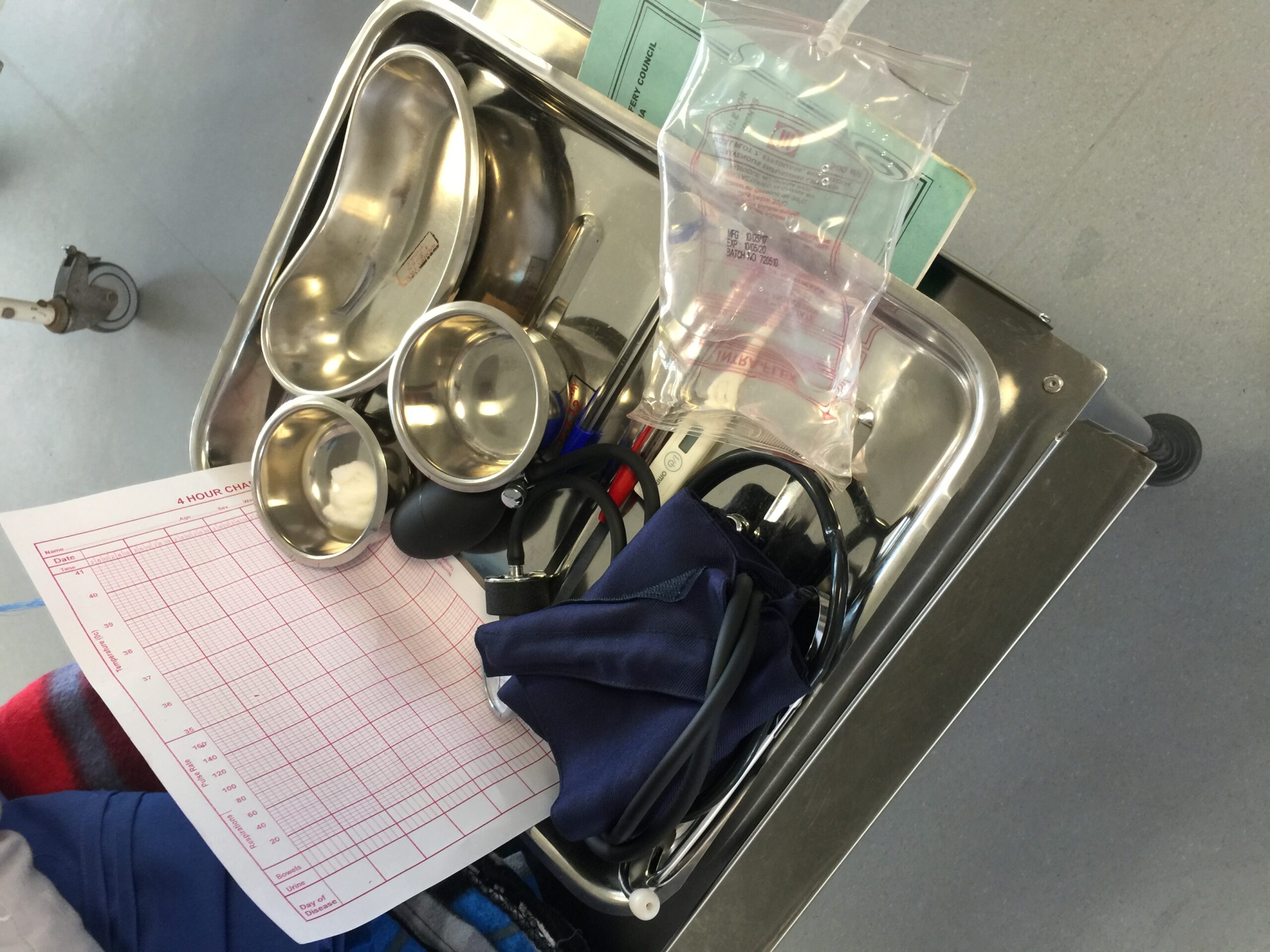
Image: “Medical tray on a trolley” by Ibrahim Achiri is licensed under CC BY-SA 4.0. To view a copy of this license, visit https://creativecommons.org/licenses/by-sa/4.0/.