Railroad Retirement Annuities Rise in January, With the Average Retired Rail Employee’s Check Up $106 to $3,761 a Month
A railroad retiree’s January annuity is built from two pieces, and the 2027 cost-of-living adjustment treats them very differently. According to the U.S. Railroad Retirement Board, Tier 1 benefits rise 3.6% and Tier 2 benefits rise 1.2%. For the average retired rail employee, that works out to $106 more a month, bringing the average regular employee annuity to $3,761.
The Railroad Retirement Board, the federal agency that pays these annuities, announced the increase in an October news release. Annuities go up in January 2027.
Two Tiers, Two Different Raises
The Tier 1 increase of 3.6% matches the rise in the Consumer Price Index, as with Social Security, according to the agency. The Social Security Administration’s cost-of-living page lists the latest adjustment at 3.6%, based on a comparison of the average third-quarter 2026 CPI-W (328.746) with the 2025 base (317.265).
Tier 2 is a separate layer, and the Railroad Retirement Board said its increase equals 32.5% of the rise in the Consumer Price Index. That is how the Tier 2 raise lands at 1.2% while Tier 1 gets the full 3.6%. A year earlier, in January 2026, Tier 1 rose 2.8% and Tier 2 rose 0.9%, the agency’s release says.
The gap between the tiers is wide in both years the agency compared. In January 2027 the Tier 1 raise is three times the Tier 2 raise (3.6% against 1.2%). In January 2026 the ratio was similar, with 2.8% for Tier 1 and 0.9% for Tier 2. Tier 2, tied to a share of the CPI increase, trails Tier 1 by design.
The Social Security Administration’s page explains that the adjustment comes from comparing the average third-quarter CPI-W with the prior base, which is why the Tier 1 increase matches the Social Security figure.
Averages for Employees, Couples and Widow(er)s
The Railroad Retirement Board published average figures for three groups. The averages blend both tiers, so an individual annuity can rise by more or less depending on how much of it comes from each tier.
- Average regular retired employee: up $106 a month to $3,761
- Average employee and spouse combined: up $149 to $5,407
- Average aged widow(er): up $67 to $2,218
The agency’s news release carries no named quotes; it was issued by the RRB’s Public Affairs office. The agency’s news release page lists the cost-of-living announcement alongside a second October release on higher earnings limits for 2027.
Subtracting each increase from the new average gives the figure the agency’s numbers imply for the current year: about $3,655 for a retired employee, $5,258 for an employee and spouse together, and $2,151 for a widow(er). Measured against those starting points, the dollar gains work out to roughly 2.9%, 2.8% and 3.1%. Those percentages are arithmetic from the published averages, not figures the agency stated.
They sit below 3.6% because Tier 2, which grows only 1.2%, makes up part of every annuity. A simple illustration shows the effect: a Tier 1 amount of $2,000 would gain $72 at 3.6%, while a Tier 2 amount of $1,000 would gain $12 at 1.2%. The more of an annuity that comes from Tier 2, the smaller the overall percentage gain.
Where the Raise Falls Short
Several groups do not see the full adjustment. According to the Railroad Retirement Board, vested dual benefit payments and supplemental annuities are not adjusted for the CPI. Widow(er)s paid under the Railroad Retirement and Survivors’ Improvement Act of 2001 receive no annual cost-of-living increases until their annuity exceeds what prior law would pay, including interim increases. The agency said almost 29% of the widow(er)s on its rolls are paid under that law.
Annuitants who also draw a Social Security benefit face another adjustment. The agency said any Social Security cost-of-living increase offsets the rise in the Tier 1 amount.
Late-December Notices With the New Rates
In late December, the Railroad Retirement Board will mail notices to all annuitants showing their January 2027 rates. The agency said the letters can also be used to confirm eligibility for income-based government programs throughout the year. The release does not give a payment date for the first increased annuity, and the Board’s retirement information page points annuitants to its handbook and benefit booklet for the rules behind each tier.
The Board lists a toll-free line at (877) 772-5772 and a TTY line at (312) 751-4701 for questions about an individual annuity.
The Inflation Reading Behind the Percentages
Both adjustments trace back to consumer prices. The Bureau of Labor Statistics said in its latest CPI release, published Oct. 14, 2026, that the all-items index rose 3.7% over the 12 months ending in September 2026 before seasonal adjustment. The cost-of-living adjustments use a different index, CPI-W, measured over the third quarter, so the figures are close but not identical.
The adjustment also arrives as part of a larger set of January changes. The Social Security Administration’s page says Social Security benefits rise 3.6% starting with December 2026 benefits, payable in January 2027, and that SSI federal payment levels rise 3.6% for January 2027 payments. Railroad retirees who receive both a railroad annuity and a Social Security benefit will see the two adjustments interact, as the Board describes above.
The Board’s other October release, on earnings limits, is listed on the same news page. It is a separate announcement from the annuity increase and is titled “Railroad Retirees Have Increased Earnings Limits in 2027.”
Get stories like this by email. Sign up for The Parent Diaries Letter.
This article was produced with AI assistance and edited for accuracy against the sources linked above.
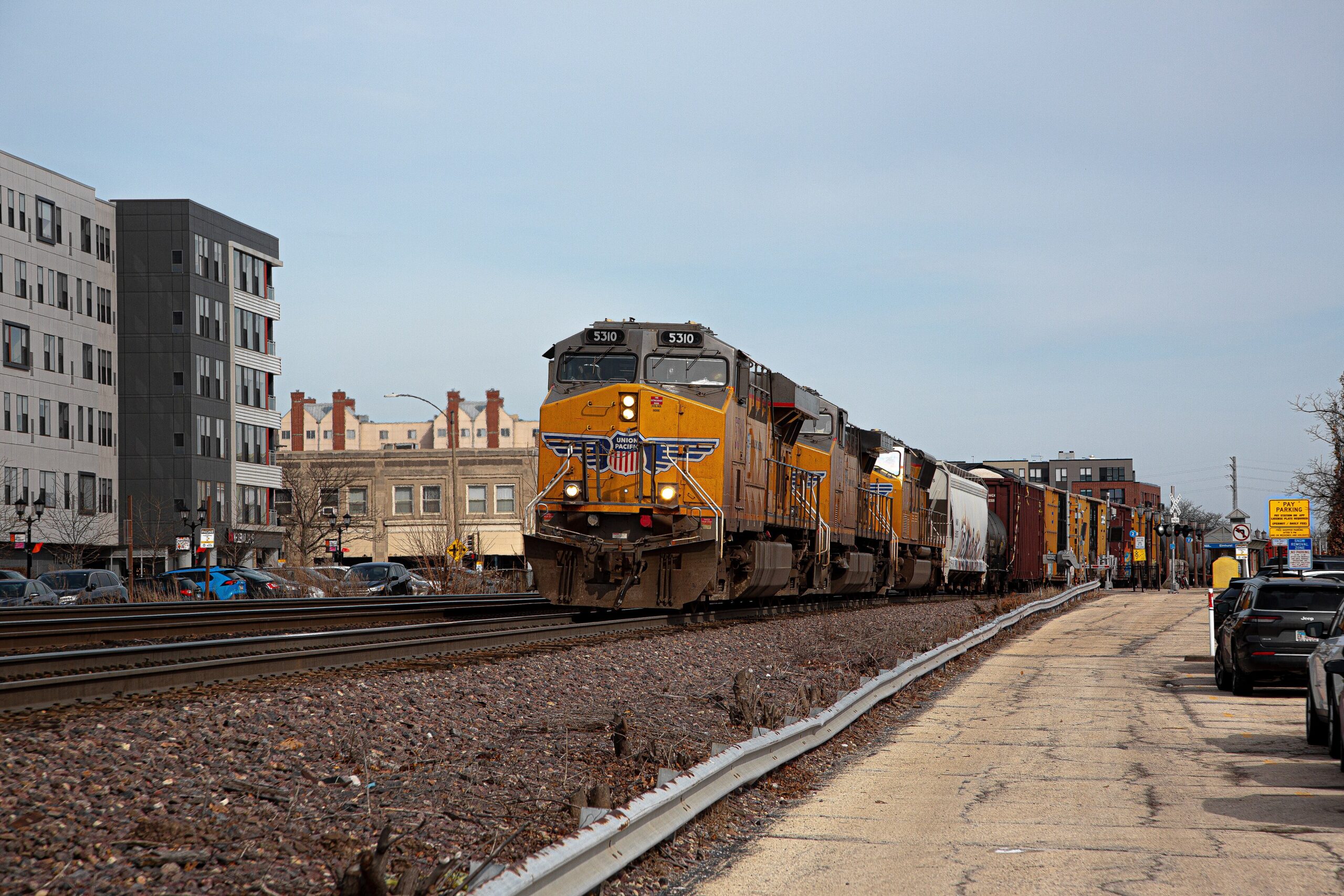
Image: GP_FullFrame – Public domain/Wikimedia Commons