Sam Altman Admits AI Is Disrupting the Balance Between Workers and Capital, and the Debate Over What Comes Next Is Growing
Artificial intelligence has been sold for years as a productivity revolution, a technology that would unlock new industries, create new jobs, and make the economy more efficient. But even some of the people building the technology are now acknowledging that the transition may be far more complicated.
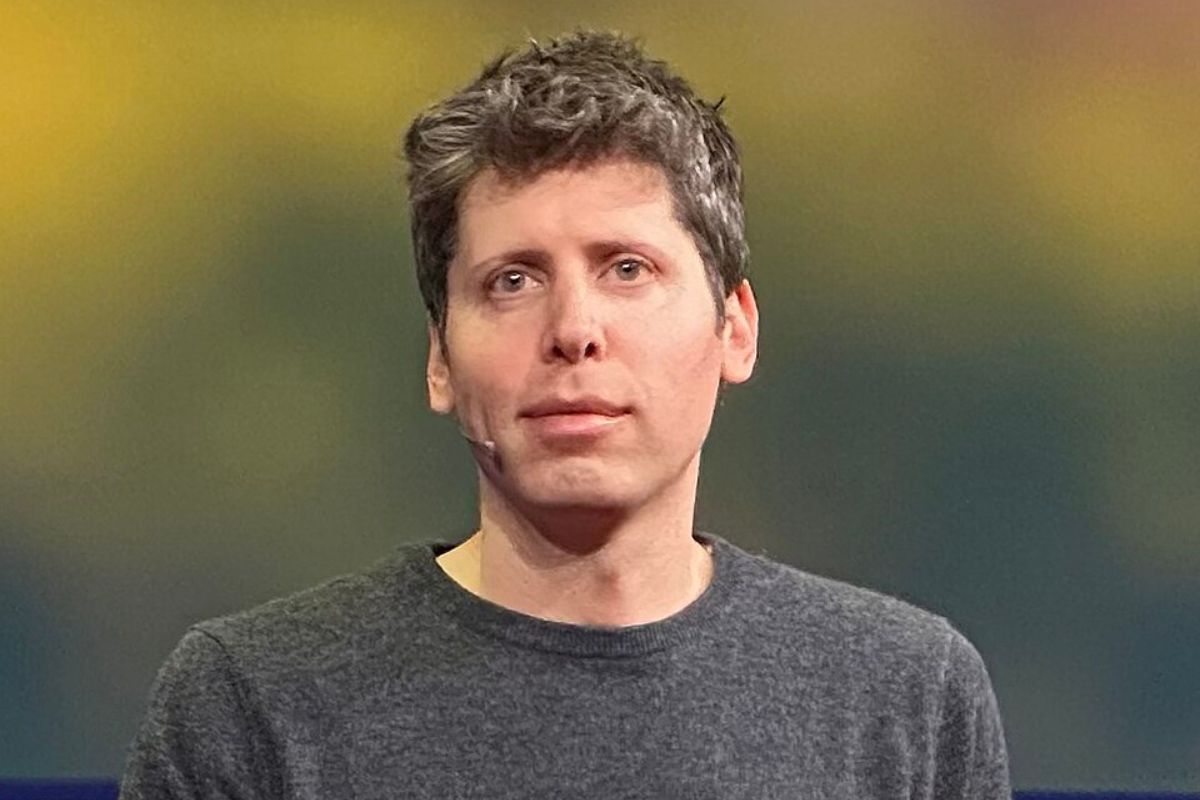
Speaking recently about the rapid expansion of artificial intelligence, OpenAI CEO Sam Altman acknowledged a growing concern among economists and workers: that AI could fundamentally shift the long-standing balance between labor and capital in the global economy.
That balance, the idea that workers contribute labor while companies provide capital and infrastructure, has been one of the defining structures of modern economic systems. But Altman suggested AI could dramatically alter that relationship as machines become capable of performing more intellectual tasks that were historically done by people.
The comments have quickly fueled debate online, including in technology forums and communities where the discussion has been unfolding in real time. In a popular Reddit thread discussing the remarks, users debated whether AI could accelerate inequality or simply represent another wave of technological change that society will eventually adapt to.
What’s becoming increasingly clear is that the conversation around AI is no longer limited to engineers and venture capitalists. It’s now a broader economic question about the future of work.
A “Painful Adjustment” May Be Coming
Altman did not present the shift as a sudden collapse of jobs. In fact, he has repeatedly said he does not believe humanity will simply run out of work.
But he did acknowledge that the next phase of AI adoption could involve a turbulent transition.
He warned that the coming years may involve a “painful adjustment” for labor markets as companies figure out how to integrate AI tools into everyday operations.
Historically, technological revolutions have followed a similar pattern.
The industrial revolution displaced millions of agricultural workers but eventually created new manufacturing jobs. The rise of computers eliminated certain clerical roles but also created entirely new industries.
The question now is whether artificial intelligence represents a similar shift — or something more profound.
Unlike earlier technologies that mainly automated physical labor, AI has the potential to automate cognitive tasks: writing, coding, analysis, customer support, and even creative work.
That means many white-collar professions that once seemed insulated from automation could face disruption.
Why the Labor-Capital Balance Matters
Economists often talk about the “labor share” of the economy — the percentage of national income that goes to workers rather than to capital owners and investors.
Over the past several decades, that share has already been declining in many advanced economies.
If AI dramatically increases productivity while requiring fewer human workers, some analysts worry that an even larger share of economic gains could flow to companies that own the technology.
That scenario is what people mean when they talk about AI shifting the balance between labor and capital.
In simple terms: if fewer workers are needed to produce the same amount of economic value, the profits generated by that productivity could become increasingly concentrated.
Some economists believe this could widen inequality unless new economic policies or social structures emerge to distribute those gains more broadly.
Others argue that history shows productivity increases eventually lead to entirely new categories of work.
AI as the Next Global Utility
Altman has also described a future where artificial intelligence becomes something closer to a utility — a service that businesses and individuals access in the same way they access electricity or internet bandwidth.
In that vision, AI would become a foundational layer of the economy, powering everything from research and education to logistics and healthcare.
But building that infrastructure requires massive investment.
Companies across the technology sector are now pouring billions of dollars into data centers, computing hardware, and energy systems needed to support large-scale AI models.
Some estimates suggest the industry could spend hundreds of billions of dollars over the coming years to expand AI capacity.
That level of investment signals how seriously companies are taking the race to develop the next generation of AI systems.
The Growing Backlash
At the same time, public skepticism about artificial intelligence has been growing.
Polls suggest many people worry about the risks associated with the technology, from job displacement to misinformation and the concentration of power among a small number of tech companies.
Even Altman himself has acknowledged that AI currently has a growing public-relations problem as more people question how the technology will reshape society.
Some critics argue that AI development is moving faster than the political and economic systems designed to regulate it.
Others say the technology is simply following the same path as previous innovations — triggering fear and uncertainty before eventually becoming integrated into everyday life.
The Bigger Question Facing the Economy
What Altman’s comments ultimately highlight is that artificial intelligence is no longer just a technological story.
It’s becoming an economic and social one.
If AI dramatically increases productivity, the global economy could generate enormous new wealth. But the real debate is who will benefit from that wealth — the workers who use the technology, or the companies that own it.
For now, even some of the people leading the AI revolution say they don’t have a clear answer.
What they do agree on is that the next phase of the AI era could reshape the relationship between work, technology, and economic power in ways that societies are only beginning to understand.
And that conversation is likely to intensify as artificial intelligence moves from experimental tools into the core infrastructure of the global economy.
More from The Tonic Edit: